
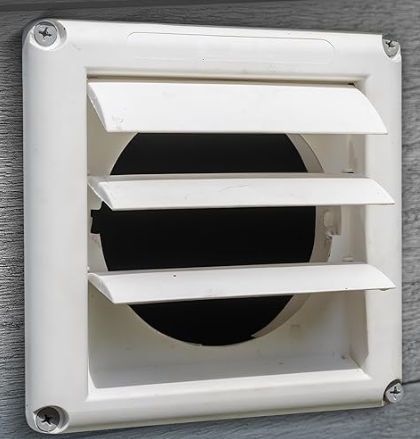
Dryer vent code requirements 2021 IRC—Dryer venting should be the simplest part of any laundry room, but it’s where more installations get flagged than just about anything else. If you’ve ever seen kinked flex duct crushed behind a dryer, vent runs stretched way beyond code, or—worst of all—exhaust dumping into an attic or crawl space, you know exactly what I mean. Whether you’re a contractor, inspector, or serious DIYer who actually wants it done right the first time, this is your no-nonsense, just-the-facts guide. No guesswork. No shortcuts. All code.
Dryer Exhaust Must Go Outside—No Exceptions
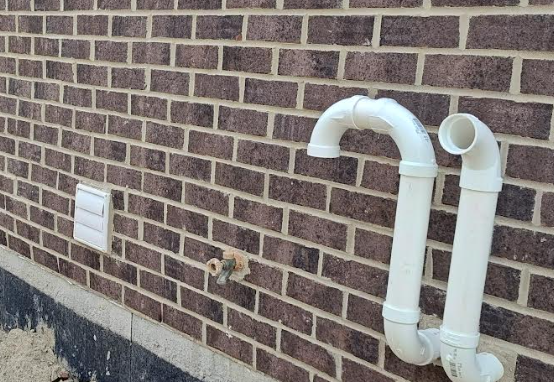
2021 IRC M1501.1, M1502.2, M1502.3
Every mechanical exhaust, especially for dryers, has to discharge outdoors. You do not meet dryer vent code requirements 2021 IRC if you vent into the attic, soffit, ridge, or crawl space.
Why? Moisture and lint build up fast and cause mold, rot, and fire hazards.
Transition Duct: Short, Listed, and Out in the Open
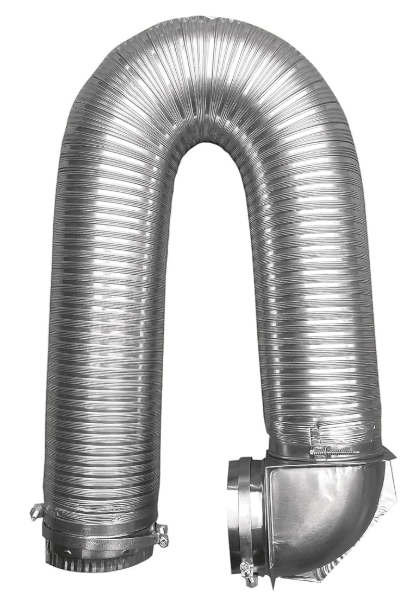
2021 IRC M1502.4.3
The only place you’re allowed to use a flexible transition duct is right behind the dryer to the wall connection.
- Max length: 8 feet.
- Must be listed/labeled UL 2158A.
- Never concealed in walls, floors, or ceilings.
- If you bury flex hose behind drywall, expect to fail the inspection.
Duct Material: Smooth Metal—No Foil, No Plastic, No Ribbed Flex
2021 IRC M1502.4.1
- Duct must be smooth-interior metal (minimum 0.0157″ thick, No. 28 gage).
- Minimum 4″ diameter.
- All joints should point in the direction of airflow and be sealed with foil tape or mastic.
- No screws penetrating in more than 1/8″—screws catch lint.
Why?
Plastic and foil flex ducts collapse, fill with lint, and catch fire. You’ll never see a pro use them in a wall.
Duct Length and Bends: Do the Math
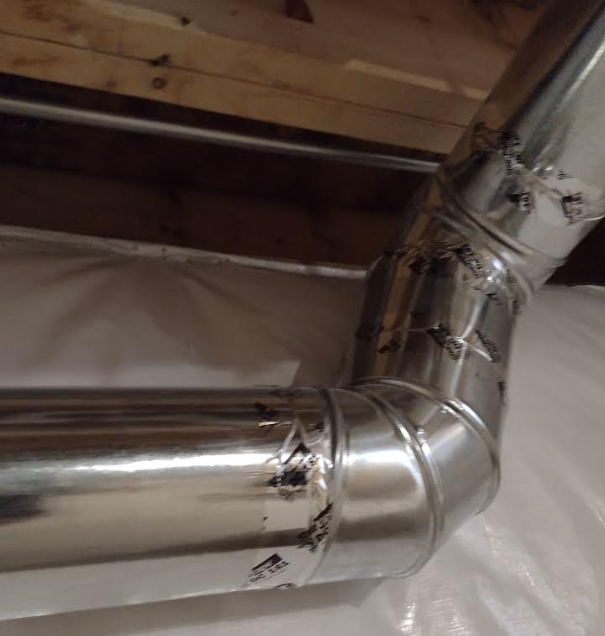
2021 IRC M1502.4.6, M1502.4.7
- Max straight duct run: 35 feet (doesn’t count the transition duct).
- For every 4″ 45-degree elbow, subtract 2.5 feet. For every 4″ 90-degree elbow, subtract 5 feet.
- You can only exceed 35 feet if either:
- The dryer manufacturer’s installation instructions explicitly allow a longer duct run—and you provide these instructions at inspection, or
- You install a UL 705–listed dryer exhaust duct power ventilator (“booster fan”) designed for use with your particular dryer, and both the ventilator and dryer manufacturer’s instructions are followed and provided at inspection.
- Labeling: If your total equivalent length is over 35 feet because of either of the above code-allowed exceptions, you must install a permanent label or tag within 6 feet of the dryer connection showing the equivalent length.
Labeling does not permit you to exceed 35 feet on its own; it’s a requirement when a longer run only allowed by code and properly documented was installed.
Why?
Long runs and too many bends choke airflow, causing lint to accumulate inside the duct. That forces the dryer to work harder, run hotter, and cycle longer—raising the risk of overheating, premature dryer failure, and even fire. This is one of the top mistakes in the field: skipping the math on length and elbows can turn a safe vent into a dangerous one.
Termination: Backdraft Damper Required, No Screens, Clear of Openings
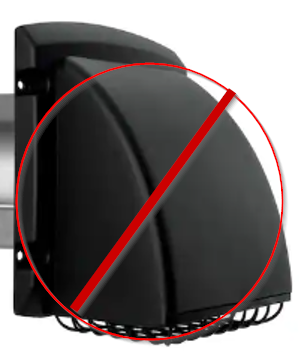
2021 IRC M1502.3
- Must terminate outside the building.
- Must have a backdraft damper (flapper or louvers)—keeps critters, rain, and cold out.
- Screens are not allowed—they trap lint and cause blockages.
- Exhaust termination must be at least 3 feet in any direction from any window, door, or air intake (including ventilated soffits).
- This keeps lint, moisture, and fumes from being drawn back inside or causing equipment problems.
Why?
Screens seem smart, but they’re a fire and performance risk. Lint quickly clogs screens, restricting airflow and causing the dryer to overheat or shut down.
If your vent termination is too close to a window, door, or intake, you’re not just risking moisture and lint being pulled back inside—you’re also risking carbon monoxide infiltration if you have a gas dryer. Blocked or poorly located vents can cause CO to enter living spaces, creating a serious health hazard.
Independent System—No Combining with Other Exhausts
2021 IRC M1502.2
You can’t Y into a bath fan, range hood, or chimney. The dryer needs its own dedicated duct.
Duct Support and Protection Plates
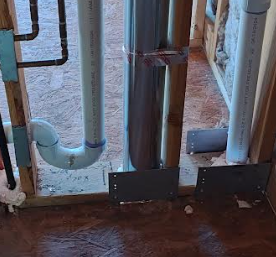
2021 IRC M1502.4.2, M1502.5
- Support the duct every 12 feet so it doesn’t sag.
- If the duct is closer than 1-1/4″ to a finished framing surface, you need a steel shield plate (at least 0.062″ thick), running 2″ above sole plates and below top plates.
Power Ventilators and Booster Fans
2021 IRC M1502.4.4, M1502.4.5
- If you need a power ventilator (rare in residential), it must be UL 705 listed and installed exactly per manufacturer’s instructions.
- Booster fans (the ones from big-box stores) are prohibited for domestic dryers unless specifically listed for that purpose, dryer, and installed per all manufacturer instructions.
Where Contractors Trip Up (and Why Inspections Fail)
- Installing transition duct in a wall
- Exceeding total run length (especially after two or three bends)
- Using the wrong duct (plastic/flex) or unlisted transition pieces
- Screens or mesh over the outside vent
- Dumping exhaust under a closed deck or into a crawl
- Forgetting the “3-foot rule” near windows and soffits
- Combining dryer vent with another exhaust
- Not providing proper documentation for exceeding max run and no proper labeling
The code isn’t just about ticking a box—it’s about safety and dryer performance too. If you cut corners, you risk fire, mold, and callbacks.
For a similar breakdown on bathroom exhaust fan code — why ducting must go outside, not into attics or soffits — see Bathroom Exhaust Fans: Why Code Requires Direct Outdoor Venting.
Checklist: Dryer Vent Code Requirements 2021 IRC: The Key Rules
- Discharges outside—never into attic, soffit, or crawlspace
- Transition duct: UL-listed, max 8 feet, not concealed
- Duct: smooth metal, 4″ min., joints sealed
- Length: ≤35 feet equivalent (subtract for elbows); label if over and only permitted by code
- Supported every 12 feet
- Termination: no screen, has damper, 3′ min. from openings and intakes
- Steel plate protection if close to framing
- No shared vent with other systems
- No unlisted booster fans
For even more field-tested code tips (and ways to actually pass your next inspection), check out my book:Pass the Inspection: GFCI & AFCI Code Requirements. It’s packed with practical advice, real code references, and the insider know-how that helps you get the job done right—the first time.
Final Word
Dryer vent code isn’t complicated, but if you don’t respect the rules, you’re asking for trouble—moisture, mold, and yes, real fire risk. Know the code, do the math, keep the run short, and always discharge outside with proper clearance. Inspectors aren’t looking to trip you up—they just want to see safe, smart work.
Looking for code-compliant parts? Here are a few options that meet 2021 IRC requirements, to make your project a little easier. As always, check the specs and your local code before ordering—these aren’t the only options, but they’re a solid starting point if you’re shopping online.
- Deflecto Supurr-Vent Louvered Outdoor Dryer Vent Cover, 4″ Pipe, White (Amazon)
- Builder’s Best All Metal SAF-T UL Listed Dryer Transition Duct Kit, 4″ x 8′ (Amazon)
Affiliate disclosure: Some links in this post are affiliate links. If you purchase through them, I may earn a small commission—at no extra cost to you. These commissions help support the channel and allow me to keep providing free, field-tested code guides and inspection resources. I only recommend products that meet code and real-world jobsite standards.