
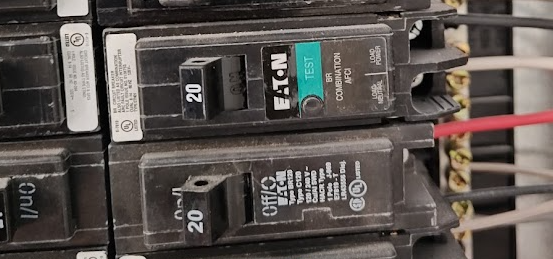
AFCI protection requirements are a critical part of the National Electrical Code (NEC 2020–2023), and every contractor, inspector, and electrician should know how to apply them in the field.
1. What AFCI Protection Is (and Is Not)
An Arc‑Fault Circuit Interrupter (AFCI) is a fire‑prevention device. That’s it. Its job is to reduce the risk of electrical fires caused by unintended arcing in branch‑circuit wiring, as required by NEC 210.12.
AFCIs don’t measure current the way a standard breaker does. Instead, they analyze the electrical waveform and look for patterns that indicate dangerous arcing—conditions that can smolder inside walls long before a breaker ever trips.
What AFCI protection actually detects:
- Parallel arcing (hot‑to‑neutral, hot‑to‑ground, neutral‑to‑ground)
- Series arcing within a conductor (loose screws, broken strands, damaged cords)
- Low‑current arcing that will not trip a standard breaker
AFCI protects wiring and fire risk, not people and not appliances. Expecting it to do more than that is one of the most common field misunderstandings.
2. Where AFCI Protection Requirements Apply (NEC 210.12)
These AFCI protection requirements under NEC 210.12 are among the most commonly misunderstood rules inspectors enforce in residential work.
Understanding AFCI protection requirements helps prevent common red tags and code violations during electrical inspections.
As of NEC 2023, AFCI protection is required for all 120‑volt, single‑phase, 10‑, 15‑, and 20‑amp branch circuits supplying outlets or devices in dwelling units.
That 10‑amp inclusion is new—it’s now explicitly part of the rule.
Dwelling unit locations requiring AFCI:
- Kitchens
- Family rooms
- Dining rooms
- Living rooms
- Parlors
- Libraries
- Dens
- Bedrooms
- Sunrooms
- Recreation rooms
- Closets
- Hallways
- Laundry areas
- Similar finished living areas
Important enforcement detail:
An “outlet” should not be confused with just a receptacle. It includes:
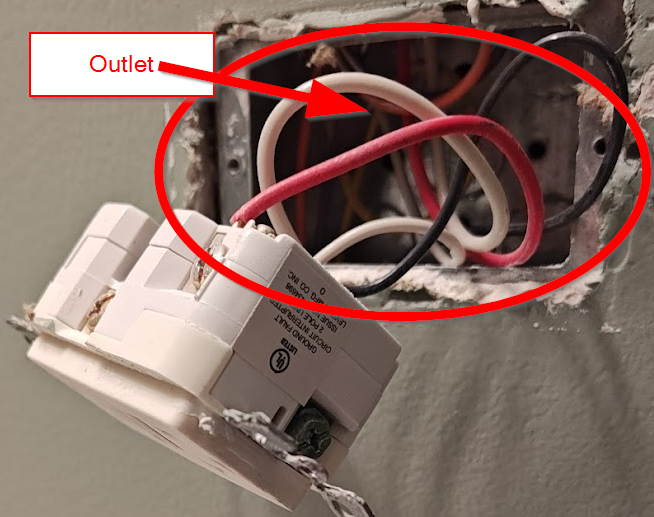
- Receptacle outlets
- Lighting outlets
- Smoke and CO alarms outlets
- Hardwired equipment outlets
If it’s a finished living space and it’s on a 120V single phase, 10/15/20A circuit, inspectors expect AFCI.
Similar Finished Living area vs other space logic:
- Finished living space → AFCI required
- Garages, bathrooms, outdoors, unfinished utility areas → AFCI generally not required unless part of finished living space area. Always check with your local AHJ and local requirements.
Remodels and service work:
- New circuits → AFCI required
- Circuit wiring modified, replaced, or extended → AFCI required
- (The 6′ extension exemption was removed in the 2023 NEC)
- Replacing receptacles in AFCI areas triggers AFCI per 406.4(D)(4)
3. AFCI Breakers vs AFCI Devices (210.12(A)(1)–(6))
The NEC allows six methods to provide AFCI protection. Some are common. Some only exist on “paper”—inspectors know the difference.
In addition to the “listed combination” gray areas below, it’s worth noting that providing AFCI protection for lighting outlets can be especially challenging, especially when circuits are extended or altered in existing homes. Making sure all lighting outlets downstream are truly protected—and accessible for future troubleshooting—often trips up even experienced pros.
Method (1): Combination‑Type AFCI Breaker
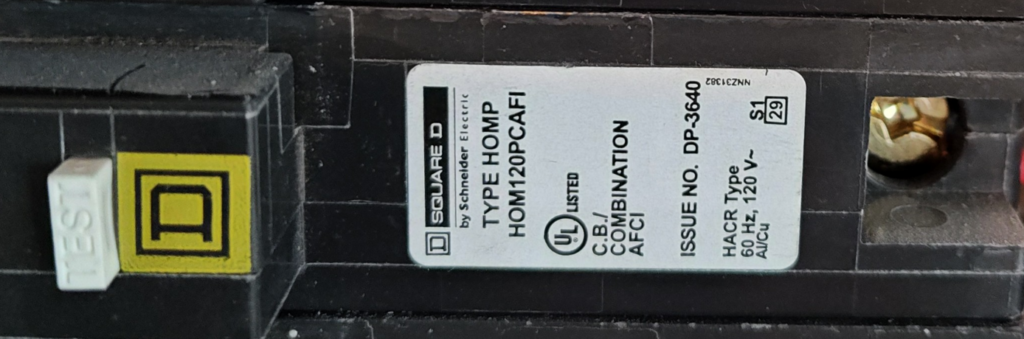
The gold standard.
- Installed at the panel
- Protects the entire branch circuit
- Detects both series and parallel arcs
- Least confusion, least pushback, cleanest inspection path
Method (2): Branch/Feeder AFCI + Outlet Branch‑Circuit AFCI
- AFCI breaker at panel plus AFCI device at first outlet
- Must be listed combination to work together
- Gray area in the code: As of 2023, there are no listed “system combination” products on the market designed to work together as required. This method is in the code, but not practical for real-world installs.
Method (3): Supplemental AFCI Breaker + Outlet Branch‑Circuit AFCI
- Strict length limits (50 ft for #14, 70 ft for #12)
- Continuous wiring required
- First outlet must be marked
- Gray area in the code: As of 2023, there are no listed “system combination” products on the market designed to work together as required. This method is in the code, but not practical for real-world installs.
Method (4): Outlet Branch‑Circuit AFCI + Standard Breaker
- AFCI device at first outlet
- Strict length limits
- First outlet must be marked
- Gray area in the code: As of 2023, there are no listed “system combination” products on the market designed to work together as required. This method is in the code, but not practical for real-world installs.
Method (5): Outlet AFCI with Metal Raceway or MC/AC to First Outlet
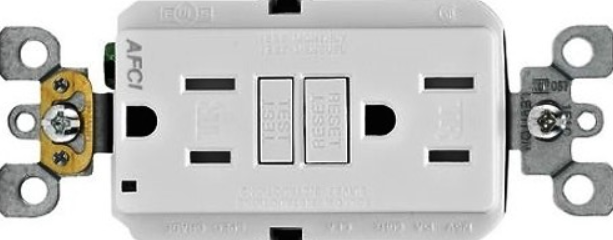
- Entire run to first outlet in metal wiring method
- Metal boxes and enclosures required
- AFCI device protects downstream only
Method (6): Outlet AFCI with Raceway Encased in 2″ Concrete
- Applies mostly to slab construction
- Same downstream‑only protection concept
Field reality:
If you want inspections to go smoothly, use a breaker‑based AFCI unless you have a compelling reason not to. Outlet methods require documentation, marking, and much closer scrutiny.
4. AFCI vs GFCI (Clear Comparison)
For a full breakdown of ground-fault protection rules that often overlap with AFCI requirements, see GFCI Protection Requirements Explained.
They do different jobs.
AFCI:
- Purpose: Fire prevention
- Detects: Series and parallel arcing
- Protects: Wiring
GFCI:
- Purpose: Ground-fault shock protection
- Detects: Current imbalance (4–6 mA)
- Protects: People
When both are required:
Kitchens, laundry areas, finished basements, and other locations where 210.8 and 210.12 overlap.
Best practice:
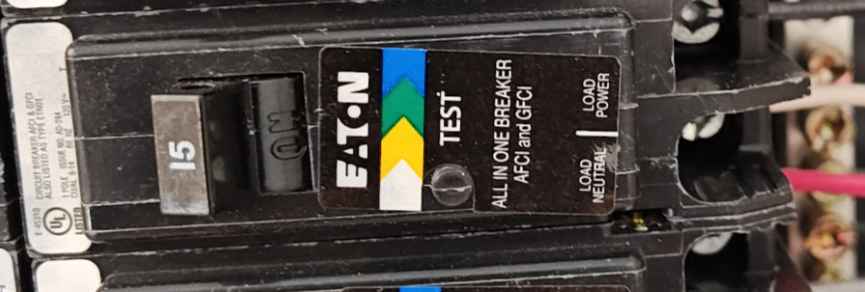
Use a dual‑function/all in one AFCI/GFCI breaker.
Do not confuse this with a “combination‑type AFCI.“
5. Common AFCI Protection Requirements and Inspection Failures
Shared neutrals
- MWBCs on single‑pole AFCIs
- No 2‑pole common trip per 210.4(B)
Improper first‑outlet installs
- First outlet not marked
- Wiring length limits exceeded
- Not listed as a system combination
Misunderstanding “combination”
- Combination‑type AFCI ≠ dual function AFCI/GFCI
Nuisance tripping causes
- Loose terminations
- Back‑stabbed devices
- Aging cords
- Dimmers and some motor loads
Missed outlets
- Lighting outlets
- Smoke and CO alarm outlets
- Hardwired equipment outlets
6. NEC 2020 vs NEC 2023 AFCI Changes
No major location expansion between 2020 and 2023.
Key clarifications:
- 10‑amp circuits added
- Same outlet definition
- Same living‑area scope
- Laundry areas remain AFCI required
7. Troubleshooting AFCI Trips (High‑Level Only)
Most common causes:
- Loose or aging connections
- Shared neutrals
- Back‑wired receptacles
- Older electronics creating waveform noise
Inspector expectations:
- Breaker test button works
- Correct breaker type installed
- Required outlets protected
8. Field‑Level Takeaways
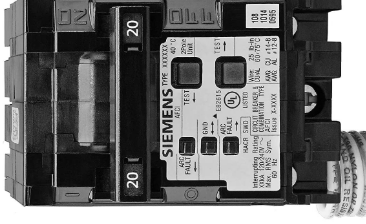
- Default to breaker‑type AFCI
- Use dual‑function breakers when GFCI is also required
- Never share neutrals without a 2‑pole listed breaker
- Understand outlet requirements
- Mark first outlets when using device‑based AFCI
- Verify labeling before inspection