
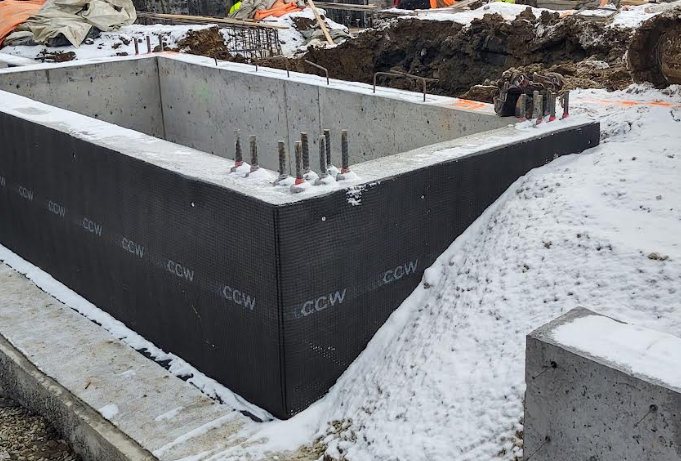
Cold weather concrete protection Zone 5 isn’t just a seasonal problem—it’s a code and inspection issue every builder in northern Illinois faces.
Zone 5 climate, basically means real winters, real freeze–thaw cycles, and plenty of days that bounce between “not bad” and “what are we doing out here?” Concrete feels every bit of that.
Here’s the thing a lot of folks miss:
The building department might approve your cold‑weather pour, but the risk is still yours. An inspector can only verify protections at the moment they’re on site—not whether they’re maintained for the full curing period.
Any approval to pour concrete in cold weather is basically an “at risk” approval. You are still responsible for protecting that concrete so it actually reaches code-required strength and doesn’t flake apart in the spring.
Always, always check with your local AHJ (Authority Having Jurisdiction) for their exact requirements. What I’m sharing is from the model codes and ACI standards, but local rules always come first.
What “Cold Weather Concrete Protection Zone 5” Really Means (In Plain Language)
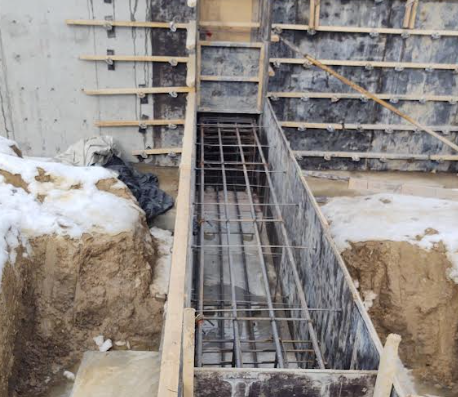
Cold weather concreting isn’t just “it feels cold” or “I can see my breath.”
ACI 306R-16, Guide to Cold Weather Concreting (the national standard referenced by ICC and the model codes), officially defines cold weather as:
- For more than 3 days in a row:
- The average daily temp is below 40°F, and
- The air temp is never above 50°F for more than half the day.
So, if you’re stuck in a stretch where highs barely hit 40–45°F and nights drop below freezing, you’re officially in cold weather concreting mode.
And in Zone 5? That’s a big part of fall, winter, and early spring.
For official standards and more technical details, see the ACI 306R-16 Guide to Cold Weather Concreting (PDF) from the American Concrete Institute.
What the Code Expects from Your Concrete
The IRC (International Residential Code) Section R402.2 and ACI 318 (as referenced by code) define minimum strengths—but always check your AHJ/local amendments and designer requirements:
- Footings and foundation walls: 2,500 psi (IRC Table R402.2, but local amendments may require more)
- Garage slabs / exterior flatwork: 3,000 psi or higher (IRC Table R402.2, or as required by local code/AHJ)
Cold weather doesn’t lower the required strength. It just makes it harder to get there if you don’t protect your concrete the right way.
The Big Idea: Keep It Warm Until It Can Survive a Freeze
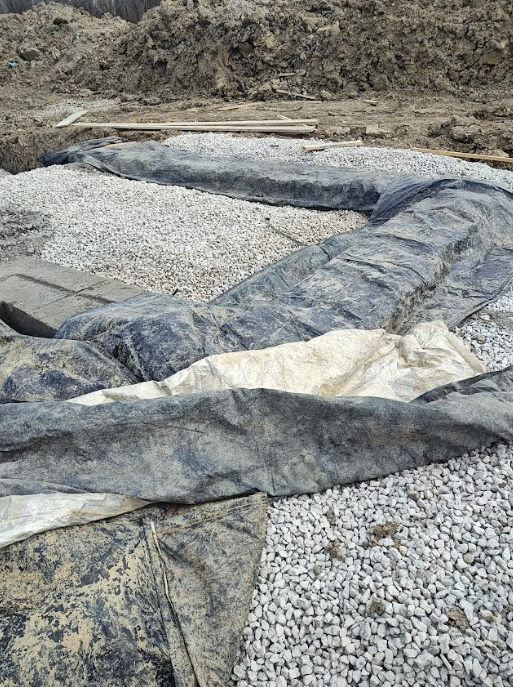
Concrete doesn’t “dry out”—it hydrates.
That’s not just builder-speak. The real strength comes from a chemical reaction between the cement and the water called hydration. As long as there’s moisture and the temperature’s right, the cement crystals keep growing and locking everything together. If it gets too cold or dries out too soon, that process slows down—or stops—and your concrete never reaches full strength.
ACI 306R-16 (referenced by code) makes this clear:
- Concrete must be protected from freezing until it hits about 500 psi compressive strength (ACI 306R-16, Section 4.2.2).
- The typical approach is to keep the concrete’s internal temperature around 50°F until it hits that early strength.
Protection duration is typically—but check local requirements—
- Regular mix:
- Keep the concrete at around 50°F or warmer for at least 3 days
- High-early-strength or with approved accelerators:
- Keep it at 50°F for at least 2 days
(Many municipal/industry handouts use these numbers, but ACI/ICC always point you to local project specs or AHJ for specifics.)
Depending on how well your blankets or enclosure hold heat, you might need to go longer—ask your AHJ.
Zone 5 Reality Check: Footings and Walls
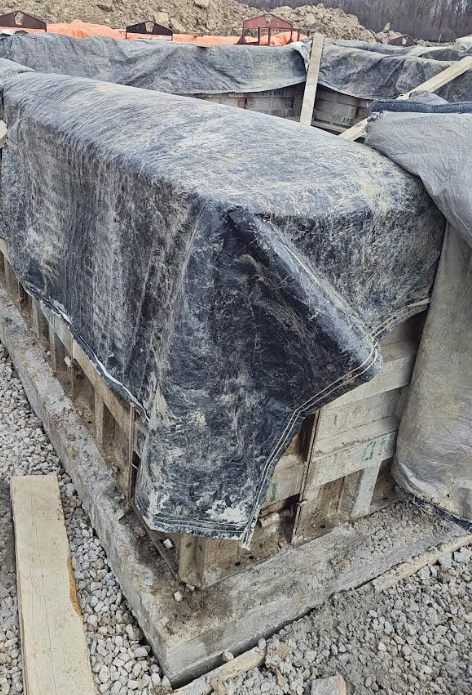
Foundations are where the “can we pour?” conversations usually start.
Best cold-weather practice for footings and foundation walls (as supported by code and ACI, but check your AHJ):
- Before the pour:
- Clear all frost, snow, and ice from the excavation and forms.
- During the pour:
- Make sure the concrete temp is right for cold weather.
- Use air-entrained mix where required (anywhere exposed to freeze–thaw).
- After the pour—protection:
- Forms and surfaces get wrapped with insulated blankets or use insulated forms—both are ACI/ICC-accepted methods.
- In colder snaps, set up a heated enclosure around the footing or wall.
- The goal: keep that concrete around 50°F or better until it’s through that early, fragile stage.
Some AHJs let you uncover footings for a short window (often 12 hours) to form and pour walls—but only after the footing gains early strength. That’s a “check the AHJ’s written policy” moment.
For more detail on slab vapor‑retarding requirements and sealing best practices, check out my post “Vapor Retarder Slab Code: Complete 10 Mil Rule & Sealing Tips.”
Don’t Forget the Flatwork: Slabs, Driveways, and Walks
Foundations get all the attention, but flatwork (driveways, walks, garage slabs) is where winter will really punish you.
If you don’t follow cold weather concrete protection Zone 5 guidelines, you risk inspection problems and failed slabs by spring.
Exterior slabs are:
- Directly exposed to freeze–thaw
- Hit with deicers
- Prone to scaling, flaking, and edge damage if not properly protected
For cold weather flatwork in Zone 5 (based on ACI and most municipal guides, but check your AHJ):
- Use an air-entrained mix for freeze–thaw exposure (IRC and ACI 318, required for exposed concrete)
- Cover the slab with insulated blankets or use forms with real insulating value (both methods specifically mentioned in ACI 306R)
- Set up a heated enclosure
- Watch edges, corners, and joints—they lose heat fastest
- Keep the slab’s internal temp around 50°F for the first 2–3 days
Ever seen a driveway peel apart after one winter? That’s usually poor protection, not enough air entrainment, or getting salted too soon.
Code Reality: Why Hay and Straw Won’t Cut It
You might still hear, “Just throw some hay on it.”
Important:
Hay and straw are not considered preferred or standard insulation methods by ACI for cold‑weather concrete protection. The ACI 306R guide warns that straw is bulky, flammable and ineffective when wet, and municipal handouts often state straw is not permitted. Neither the IRC nor IBC explicitly list hay/straw as an acceptable means of cold‑weather concrete protection — meaning if you use it, you must check your local AHJ policy first.
- Hay holds moisture. When it’s wet, it stays wet, trapping it against the concrete.
- Wet hay grows mold, stains, and leaves a mess you’ll regret scraping up in spring.
- It doesn’t deliver consistent R-value—thin spots let in the cold.
If you want something that works and gets approved:
- Use curing/insulating blankets with a real R-value
- Use insulated forms
- Set up a proper, vented heated enclosure if you’re really fighting temps
Short version:
Hay is for animals. Blankets and enclosures are for concrete.
Heaters, Fumes, and Surface Damage
Using fuel-fired heaters (propane, kerosene) inside an enclosure?
- Vented only. Combustion fumes can mess with your surface and cause dusting or weak top layers.
- The goal is to keep the concrete warm—not fill your enclosure with exhaust.
Cool-Down Matters Too
After the protection period, don’t yank everything off and let the concrete hit the cold all at once.
- Cool gradually. Sudden drops create stresses and cracks, especially in walls and thick slabs.
Simple Checklist You Can Use in the Field
Quick mental checklist before your next cold weather pour:
- Are we in cold weather conditions (per ACI definition—multi-day below 40°F)?
- Did you check with your AHJ for their cold weather policy or handout?
- Are you using the right mix (air-entrained/accelerated as required)?
- Got enough blankets, insulated forms, or enclosures ready before you start?
- Plan to keep the concrete at 50°F for 2–3 days? (Typically, but check local)
- How are you protecting edges, corners, and joints?
- What’s your cool-down plan after curing?
If you can’t check all those boxes, you’re rolling the dice on your pour (and your inspection).
Key Questions (and Straight Answers)
Do I really have to follow cold weather rules in Zone 5?
If you’re pouring during a cold snap, yes. The code and your AHJ expect it.
How warm does concrete have to be?
About 50°F for those first couple days (typical field standard, but check your AHJ/project specs).
Is it different for foundations vs flatwork?
Protection principles are the same. Flatwork takes more winter abuse, so durability matters more.
Can I just throw hay on it?
No—hay and straw are not preferred by ACI as insulation for concrete. Use proper blankets, forms, or enclosures.
Who’s responsible if it flakes, scales, or doesn’t hit strength?
You are. Cold Weather pours are at the risk of the builder or contractor.
Do I have to check with my AHJ?
Yes—every time. Local amendments or bulletins can change everything.