
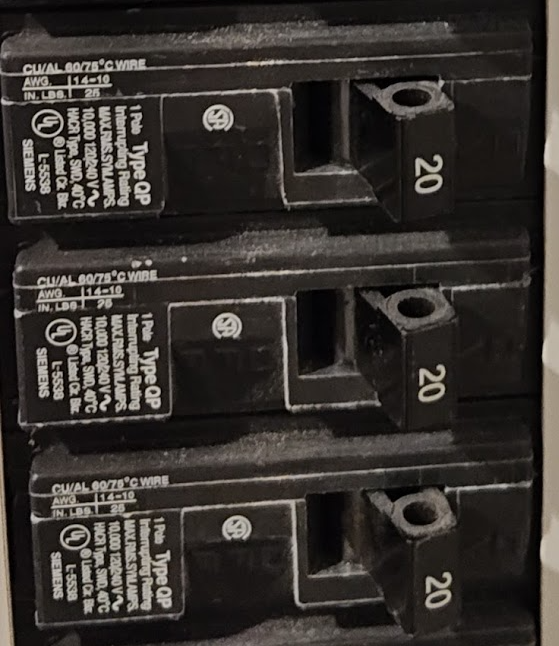
Conductor ampacity is one of the most misunderstood parts of the NEC. Many installers assume the wire insulation rating controls everything, but in reality, termination ratings and installation conditions determine which ampacity column you are allowed to use.
This is where a lot of installations go sideways.
Not because the table is confusing — but because it’s applied without looking at what actually controls it.
Most guys see this:
- THHN conductor
- Marked 90°C
- Table 310.16 shows higher ampacity
And they stop there.
That’s not how the NEC is applied.
Governing Rule That Controls This
The controlling section is:
- NEC 110.14(C)(1) — Temperature limitations of terminations
This is what determines which ampacity column you are permitted to use.
Not the wire marking.
What Ampacity Is Based On
Ampacity is the allowable current under the conditions of use, which include:
- Termination ratings
- Equipment listings
- Installation method
If termination ratings are not accounted for, ampacity is being applied incorrectly.
Table 310.16 — What It Actually Provides
Table 310.16 gives three temperature columns:
- 60°C
- 75°C
- 90°C
These are not interchangeable options.
They are limits tied to how the conductor is installed and terminated.
What Controls Which Column You Use
Per NEC 110.14(C)(1), conductor ampacity must be selected based on the temperature rating associated with the equipment terminations, unless the Code specifically permits otherwise.
For equipment rated 100 amperes or less, or for conductors #1 AWG and smaller, the ampacity is based on the 60°C rating, unless the equipment is listed and identified for use with conductors rated 75°C.
If the equipment is marked or listed for 75°C conductors, the 75°C column is permitted.
If the termination rating cannot be verified, a higher temperature rating cannot be assumed.
Here’s what conductor ampacity looks like in the field
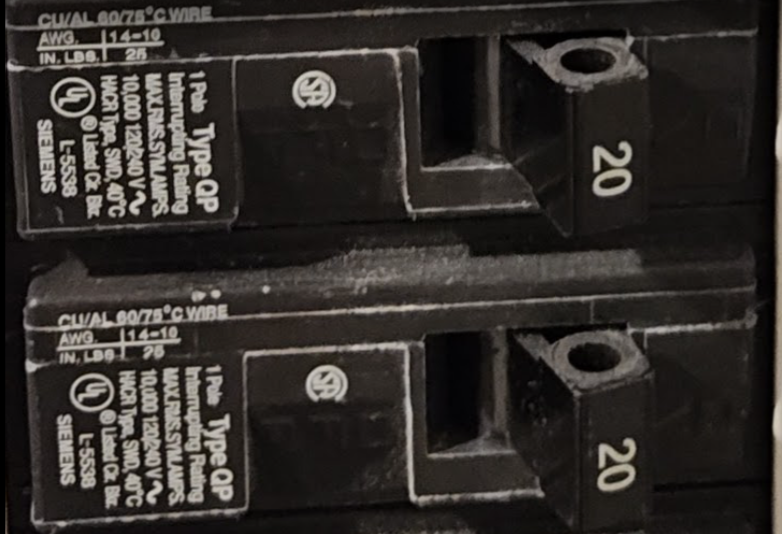
A breaker marked CU/AL 60/75°C is not selecting an ampacity column for you.
It is identifying two things:
- The terminal is listed for copper or aluminum conductors
- The terminal is rated for conductors operating at 60°C or 75°C
That temperature marking is what ties directly into NEC 110.14(C) and determines the maximum ampacity column you are permitted to use.
You’ll see similar temperature ratings on:
- Device terminals (switches, receptacles)
- Equipment nameplates
- Lugs
Those markings are what establish the temperature limitation of the termination, and that limitation controls conductor ampacity.
What This Means in a Conduit Installation
In a pipe-and-wire system using THHN/THWN:
- The conductor insulation may be rated 90°C
- That does not permit using the 90°C column for final ampacity
The limiting factor is the termination rating of:
- Breakers
- Lugs
- Equipment terminals
Typical outcome:
- Verified 75°C terminations → use 75°C column
- Unverified or lower-rated terminations → evaluate against the lower temperature limitation
HVAC equipment is one of the most common places installers get tripped up—not because the Code is unclear, but because the manufacturer’s data tag is ignored or misunderstood.
I’ve broken this down in detail in another post, where I walk through how the nameplate, ampacity, and breaker sizing all come together in real HVAC inspections:
How to Pass Your AC Inspection: Avoid These Common NEC Violations
Where the 90°C Rating Actually Applies
The 90°C rating has a specific use.
Adjustment and correction factors are permitted to be applied using the 90°C insulation rating of the conductor.
However:
After adjustment and correction, the resulting ampacity cannot exceed the termination temperature limitation in 110.14(C).
The 90°C column is used to perform the calculation — not to set the final allowable ampacity.
With NM Cable (This Is Locked In)
- NEC 334.80 — NM cable
This requires ampacity to be based on the 60°C column.
Even though NM conductors are typically rated 90°C:
- The 60°C column controls final ampacity
- The 75°C and 90°C columns are not used to increase ampacity
However:
The 90°C rating is still permitted for adjustment and correction calculations, provided the final ampacity does not exceed the 60°C limitation.
Small Conductor Limits Still Apply
Separate from temperature limitations:
- NEC 240.4(D) — Small conductor rule
This limits overcurrent protection to:
- #14 copper → 15A
- #12 copper → 20A
- #10 copper → 30A
These limits apply regardless of higher ampacity values shown in Table 310.16.
What Inspectors Are Looking For
In the field, this comes down to a few checks:
- What is the conductor insulation rating?
- What is the termination rating?
- Which column from Table 310.16 was used?
- Does it comply with 110.14(C)?
- Does it comply with 240.4(D)?
If the selected ampacity exceeds the termination limitation:
It fails.
Bottom Line
- Ampacity is controlled by termination ratings, not just conductor insulation
- 110.14(C) determines which column is permitted
- 90°C insulation is used for adjustment and correction — not final ampacity
- NM cable is a fixed 60°C application (334.80)
- Small conductor limits (240.4(D)) still apply
That’s the framework.
Get the Right Code Guide for the Job
Tired of code confusion, inspection fails, or second-guessing your wiring? These practical field guides and checklists are built for pros, contractors, and serious DIYers—clear, code-cited, and inspection-tested. Grab the resource that fits your next project:
Available Guides:
• Pass the Inspection: A Field Guide to GFCI & AFCI Code Requirements
My book with clear explanations, diagrams, and field checklists to help you wire right the first time and pass every inspection. Covers NEC 2020/2023, written for real-world job sites.
• Kitchen GFCI & AFCI Requirements Checklist (NEC 2020 & 2023 Field Guide) –https://payhip.com/b/4G7Yd
• Laundry Area GFCI & AFCI Requirements Checklist (2020 & 2023 NEC)
• Garage & Outdoor GFCI Requirements Checklist (2020 & 2023 NEC)