EVSE GFCI requirements NEC 2020 and 2023 can look confusing at first — not because the code is unclear, but because multiple sections may apply depending on connection type and location.
I introduced this reasoning method in an earlier post, but here we’re going to slow it down and apply it directly to EV charging installations.
If you haven’t already, start with my foundational approach to code reasoning in How Professionals Determine NEC Applicability in the Field — the structured way pros separate applicability from application before diving into specific requirements.
Because most code mistakes don’t happen from ignorance.
They happen from skipping steps.
Someone jumps straight to:
- “It needs GFCI.”
- “That’s how we always wire it.”
- “The inspector last year wanted it.”
That’s not code reasoning. That’s guessing with confidence.
After decades in the field — wiring, troubleshooting, inspecting — I learned something simple:
You don’t start with the answer.
You start with the governing section.
This is the BCG Code Reasoning Framework — the method I use to determine NEC applicability without guessing, over-applying, or missing triggers.
It’s structured.
It’s disciplined.
And it works in the field.
The BCG Code Reasoning Framework (7 Steps)
This isn’t academic. It’s practical.
This is the order I run through in my head on every inspection and every job.
1) Identify the Governing Section
Before deciding what’s required, figure out what actually governs the condition in front of you.
If the question is GFCI, don’t start with “Does it need GFCI?”
Start with:
- Is this a location rule under 210.8(A)?
- Is this an outdoor outlet rule under 210.8(F)?
- Is this an EVSE receptacle rule under 625.54?
Different governing sections. Different triggers. Different outcomes.
If you start in the wrong section, everything after that is off.
2) Confirm the Applicable NEC Cycle
This one changes answers.
Are you under:
- NEC 2020, or
- NEC 2023?
Sections are revised between cycles. Even when a requirement remains the same, wording and cross-references can change. If you don’t confirm which cycle has been adopted, you can argue confidently and still be applying the wrong edition.
Always verify the adopted cycle before applying any requirement.
3) Define Controlling Terms (Article 100 Where Applicable)
- The NEC uses words precisely.
- If a rule is tied to a defined term, you better know what that term means.
- A few that matter constantly:
That last one matters heavily for EVSE.
If the rule is about receptacles and there is no receptacle installed, that section isn’t triggered.
That’s not interpretation. That’s vocabulary
4) Determine Whether the Trigger Condition Exists
This is where most confusion clears up.
NEC rules are not applied because something seems similar.
They are applied because a trigger condition exists.
Triggers might be:
- A specific location
- A receptacle being installed
- A voltage-to-ground limit
- An amperage limit
- Equipment installed for a defined purpose
If the trigger exists, the rule applies.
If it doesn’t, it doesn’t.
5) Confirm Scope and Exclusions
Even when a trigger exists, confirm scope.
Does the section apply to:
- Dwellings/Other Than Dwellings?
- This type of equipment?
- This configuration?
Every section has boundaries. If you skip scope, you start enforcing rules outside their limits.
6) Apply the Minimum Requirement — No More, No Less
Once applicability is proven, apply the minimum requirement exactly as written.
Not extra.
Not “it makes sense.”
Not because someone once asked for it.
Minimum code means minimum code.
7) Account for AHJ / Local Amendments
After all that, you account for local adoption and amendments.
Local enforcement can expand or modify requirements — but it does not replace disciplined NEC reasoning.
It sits on top of it.
EVSE GFCI Requirements NEC 2020 and 2023 Applied in the Field
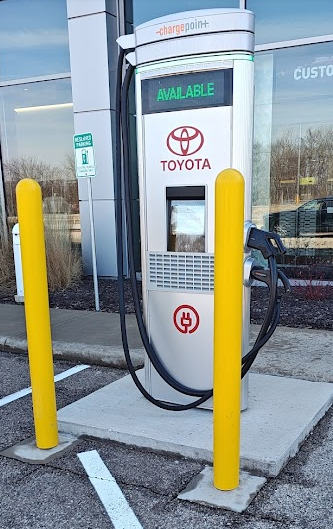
Electric vehicle charging is one of the biggest GFCI confusion points right now — not because the code is unclear, but because multiple sections can apply depending on:
- Whether the EVSE is cord-and-plug connected or hardwired, and
- Where it is installed.
So let’s run it through the framework.
Governing Sections for EVSE GFCI
For EV charging installations at a dwelling, GFCI requirements commonly come from:
- 210.8(A) — 210.8(A) — Location-based GFCI for dwelling unit receptacles (within its rating limits)
- 210.8(A)(2) — Garages and accessory buildings with floors at or below grade
- 210.8(A)(3) — Outdoors
- 210.8(F) — Outdoor outlets at dwellings (within rating limits)
- 625.54 — Receptacles installed for connection of EVSE charging equipment
- 110.3(B) — Manufacturer installation instructions
That’s our rule set.
NEC 2020 Analysis — 625.54
Under NEC 2020, 625.54 required:
GFCI protection for personnel for all receptacles installed for the connection of electric vehicle charging equipment.
Key word: receptacles.
If a receptacle is installed specifically for EVSE charging, 625.54 (2020) requires GFCI protection for personnel.
Separately:
If that receptacle is located in a garage or outdoors in a dwelling, 210.8(A) location triggers apply independently.
Two separate triggers can point to the same outcome.
That’s not duplication — that’s layered applicability.
NEC 2023 Analysis — 625.54
Under NEC 2023, 625.54 continues to require:
GFCI protection for personnel for all receptacles installed for the connection of electric vehicle charging.
The core requirement did not change.
The 2023 edition removed the introductory cross-reference language to 210.8, but the obligation to provide GFCI protection for EV charging receptacles remains.
So under 2023:
If a receptacle is installed for EV charging, 625.54 requires GFCI protection for personnel.
Location-based requirements under 210.8(A) are evaluated separately when applicable.
Controlling Terms (This Is Where It Turns)
This rises or falls on two words:
A receptacle is what you plug into.
An outlet is the point where power is supplied — whether receptacle or hardwired.
That distinction controls the analysis because:
- 625.54 applies to receptacles only.
- 210.8(A) applies to receptacles only.
- 210.8(F) applies to outlets.
Each trigger is evaluated separately.
Applying the Sections (2023 Example)
Cord-and-Plug EVSE in a Garage:
• 625.54 applies (receptacle installed for EV charging)
• 210.8(A)(2) applies (garage receptacle)
→ GFCI required
Cord-and-Plug EVSE Outdoors:
• 625.54 applies
• 210.8(A)(3) applies
→ GFCI required
Hardwired EVSE Outdoors (≤150V to ground, ≤50A)
- 625.54 does not apply (no receptacle installed)
- 210.8(F) applies because it regulates outdoor outlets within its stated limits
→ GFCI required
Hardwired EVSE in a Garage
- 625.54 does not apply
- 210.8(A)(2) does not apply unless a receptacle is involved
- 210.8(F) applies when its conditions are met
→ Evaluate only the triggers that actually exist. Do not assume one.
Manufacturer Instructions — 110.3(B)
After code triggers are evaluated, installation must comply with manufacturer instructions for listed equipment per 110.3(B).
That includes verifying whether the EVSE listing requires upstream protection or specifies installation conditions.
However, manufacturer instructions cannot lower the minimum requirements of the NEC. The NEC establishes the minimum safety standard. Installation instructions must be followed — but they do not override or reduce code-required protection.
Manufacturer requirements are enforceable under 110.3(B), provided they do not conflict with the minimum NEC requirements.
What Inspectors Actually Check
At inspection, the reasoning is straightforward:
- What NEC cycle is adopted?
- Is the EVSE cord-and-plug connected or hardwired?
- If cord-and-plug, does a receptacle exist for the EV charging connection?
- If a receptacle exists, does 625.54 apply?
- If a receptacle exists, is it in a location covered by 210.8(A)?
- If hardwired or installed outdoors, does 210.8(F) apply to the outlet?
- Does the installation comply with 110.3(B)?
That’s it.
No assumptions.
No over-application.
Just triggers and minimum requirements.
Get the Right Code Guide for the Job
Tired of code confusion, inspection fails, or second-guessing your wiring? These practical field guides and checklists are built for pros, contractors, and serious DIYers—clear, code-cited, and inspection-tested. Grab the resource that fits your next project:
Available Guides:
- Pass the Inspection: A Field Guide to GFCI & AFCI Code Requirements
My book with clear explanations, diagrams, and field checklists to help you wire right the first time and pass every inspection. Covers NEC 2020/2023, written for real-world job sites. - Kitchen GFCI & AFCI Requirements Checklist (NEC 2020 & 2023 Field Guide)
- Laundry Area GFCI & AFCI Requirements Checklist (2020 & 2023 NEC)