
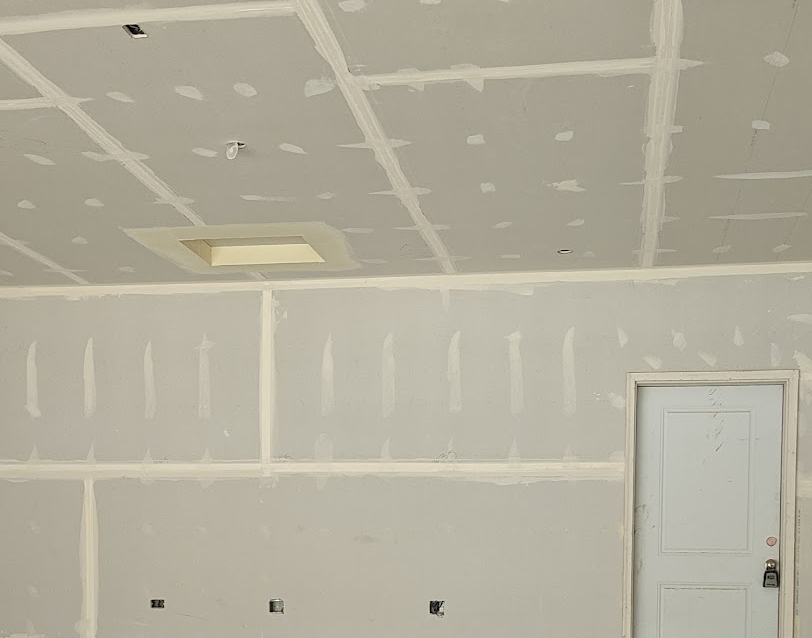
Garage receptacle requirements can be easy to misread. It is easy to see the NEC requirement for a 120-volt, 20-amp branch circuit in a dwelling-unit garage and conclude that every receptacle in the garage has to be on a 20-amp circuit.
That is not what the NEC requires.
The key is understanding the difference between the receptacle outlets required by NEC 210.52(G)(1) and additional receptacle outlets installed in the garage.
The language also differs between the 2020 and 2023 NEC, so the applicable code cycle matters.
Start With the Garage Receptacle Requirements
NEC 210.52(G)(1) establishes the minimum receptacle requirement for dwelling-unit garages.
In each attached garage and each detached garage with electric power, at least one receptacle outlet must be installed in each vehicle bay. That required receptacle cannot be more than 5½ feet above the floor.
There is an exception for garage spaces that are not attached to an individual dwelling unit of a multifamily dwelling.
The 5½-foot maximum is important because it applies to the receptacle outlet required by 210.52(G)(1).
A receptacle can be installed higher than 5½ feet in a garage. It simply cannot be used to satisfy the receptacle requirement of 210.52(G)(1).
That distinction becomes important with garage door opener receptacles.
Garage receptacles also have separate GFCI protection requirements. For a detailed breakdown of where GFCI protection is required and how the NEC applies, see my GFCI Protection Requirements Explained guide.
What About the Garage Door Opener Receptacle?
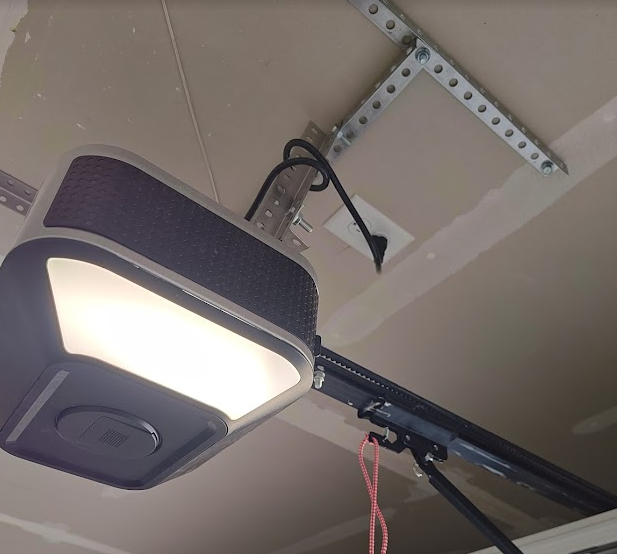
A typical garage door opener receptacle is installed at or near the ceiling.
If that receptacle is more than 5½ feet above the floor, it cannot be counted as the receptacle required in the vehicle bay by 210.52(G)(1).
That does not mean the garage door opener receptacle violates the 5½-foot requirement.
The height limitation applies to the receptacle being used to satisfy 210.52(G)(1).
There is another important sentence in 210.52(G). The required receptacles covered by this section are in addition to receptacles required for specific equipment.
So when inspecting the garage, the first question is not simply whether there is a receptacle somewhere in the garage. The question is whether the required receptacle outlet has been provided in each vehicle bay and whether it complies with the 5½-foot maximum height.
From there, we can determine which branch-circuit requirements apply.
2020 NEC Garage Branch Circuit Requirements
Under the 2020 NEC, 210.11(C)(4) requires at least one 120-volt, 20-amp branch circuit to supply the receptacle outlets required by 210.52(G)(1) in attached garages and detached garages with electric power.
The controlling words are “required by 210.52(G)(1).”
That connects the required 20-amp garage branch circuit directly to the required vehicle-bay receptacles.
The 2020 NEC also states that this circuit cannot supply other outlets.
There is one exception. The required circuit is permitted to supply readily accessible outdoor receptacle outlets.
The important point is that the 2020 requirement does not make every receptacle installed in the garage a receptacle required by 210.52(G)(1).
Once the required vehicle-bay receptacles have been provided and supplied as required by 210.11(C)(4), additional garage receptacles are not automatically required by that section to be supplied by a 20-amp branch circuit.
2023 NEC Garage Branch Circuit Requirements
The wording differs in the 2023 NEC.
Section 210.11(C)(4) still requires at least one 120-volt, 20-amp branch circuit for an attached garage or detached garage with electric power.
The 2023 language requires that circuit to supply receptacle outlets, including those required by 210.52(G)(1).
This means the required vehicle-bay receptacles must be supplied by the required 20-amp garage branch circuit, and that circuit is also permitted to serve other receptacle outlets within the garage.
The 2023 NEC then expressly addresses additional branch circuits.
Additional branch circuits rated 15 amperes or greater are permitted to serve receptacle outlets other than those required by 210.52(G)(1).
So an additional garage receptacle does not automatically require another 20-amp circuit.
The required 20-amp garage circuit can serve additional garage receptacles, and additional branch circuits rated 15 amperes or greater are also permitted to serve receptacles other than those required by 210.52(G)(1).
2020 vs. 2023: Can the Required 20-Amp Circuit Supply the Garage Door Opener Receptacle?
This is where the difference between the two code cycles becomes important in the field.
Under the 2020 NEC, 210.11(C)(4) requires the 20-amp garage branch circuit to supply the receptacle outlets required by 210.52(G)(1) and states that the circuit shall have no other outlets. The exception permits readily accessible outdoor receptacle outlets.
A garage door opener receptacle above 5½ feet does not qualify as one of the receptacle outlets required by 210.52(G)(1). Therefore, under the 2020 NEC, that garage door opener receptacle cannot be supplied by the required 20-amp garage branch circuit.
The 2023 NEC changed the wording of 210.11(C)(4). The required 20-amp branch circuit now supplies receptacle outlets, including those required by 210.52(G)(1).
That means the required 20-amp garage circuit can supply additional receptacle outlets in the garage, including a receptacle for a garage door opener.
The 2023 NEC also permits additional branch circuits rated 15 amperes or greater to serve receptacle outlets other than those required by 210.52(G)(1).
So the code-cycle distinction matters:
2020 NEC: The required 20-amp garage circuit supplies the receptacles required by 210.52(G)(1). A garage door opener receptacle that does not qualify as one of those required receptacles cannot be supplied by that required circuit.
2023 NEC: The required 20-amp garage circuit supplies garage receptacle outlets, including those required by 210.52(G)(1). The garage door opener receptacle can be supplied by that circuit.
2023 NEC Exception No. 1 — Outdoor Receptacles
The general rule in 210.11(C)(4) states that the required 20-amp garage circuit cannot supply other outlets.
Exception No. 1 permits that circuit to supply outdoor receptacle outlets.
There is a code-cycle difference worth noting here.
The 2020 NEC exception permitted the circuit to supply readily accessible outdoor receptacle outlets.
The 2023 NEC removed the words “readily accessible.” Under the 2023 language, the circuit is permitted to supply outdoor receptacle outlets.
2023 NEC Exception No. 2 — Single-Vehicle-Bay Garage
The 2023 NEC added another exception for a single-vehicle-bay garage.
Where the required 20-amp circuit supplies a single-vehicle-bay garage, outlets for other equipment within that same garage are permitted to be supplied by the circuit when the requirements of 210.23(B)(1) and (B)(2) are met.
Those sections establish load limitations for equipment connected to the branch circuit.
For cord-and-plug-connected utilization equipment that is not fastened in place, the rating of any one piece of equipment cannot exceed 80 percent of the branch-circuit ampere rating.
For utilization equipment fastened in place, other than luminaires, the total rating cannot exceed 50 percent of the branch-circuit ampere rating where lighting units, cord-and-plug-connected utilization equipment not fastened in place, or both, are also supplied.
This exception applies specifically where the 20-amp circuit supplies a single-vehicle-bay garage.
It should not be extended to garages that do not meet that condition.
Required Receptacles vs. Additional Receptacles
This is the simplest way to keep the requirements straight.
The receptacle outlets required by 210.52(G)(1) must be installed in each vehicle bay and cannot be more than 5½ feet above the floor.
Those required receptacles must be supplied by the required 120-volt, 20-amp garage branch circuit under 210.11(C)(4).
Additional garage receptacles are different.
Under the 2020 NEC, the 20-amp branch-circuit requirement of 210.11(C)(4) is specifically tied to receptacle outlets required by 210.52(G)(1). Additional garage receptacles are not automatically required by that section to be supplied by a 20-amp circuit.
Under the 2023 NEC, the required 20-amp circuit supplies garage receptacle outlets, including those required by 210.52(G)(1). Additional branch circuits rated 15 amperes or greater are permitted to serve receptacle outlets other than those required by 210.52(G)(1).
That is why simply saying, “Every garage receptacle has to be on a 20-amp circuit,” goes beyond what the NEC requires.
The Bottom Line
No, every receptacle in a dwelling-unit garage does not automatically have to be supplied by a 20-amp branch circuit.
Start with the receptacles required by 210.52(G)(1).
There must be at least one required receptacle outlet in each vehicle bay, and it cannot be more than 5½ feet above the floor. A garage door opener receptacle above that height does not satisfy that requirement.
Then apply 210.11(C)(4) based on the adopted NEC edition.
Under the 2020 NEC, the required 120-volt, 20-amp garage branch circuit is tied specifically to the receptacles required by 210.52(G)(1). A garage door opener receptacle above 5½ feet is not one of those required receptacles and cannot be supplied by that required 20-amp circuit.
Under the 2023 NEC, the required 20-amp circuit supplies garage receptacle outlets, including those required by 210.52(G)(1). That means the garage door opener receptacle can be supplied by the required 20-amp garage circuit. Additional branch circuits rated 15 amperes or greater are also permitted to serve receptacle outlets other than those required by 210.52(G)(1).
The 2023 NEC also includes specific exceptions allowing outdoor receptacle outlets and, under the conditions of Exception No. 2, other equipment in a single-vehicle-bay garage to be supplied by the required 20-amp circuit.
The key is not to assume that every receptacle located in a garage is treated the same. Identify which receptacles are required by 210.52(G)(1), determine the applicable NEC cycle, and then apply 210.11(C)(4) accordingly.
As always, verify which NEC edition has been adopted by the local jurisdiction and whether any local amendments change these requirements.
Get the Right Code Guide for the Job
Tired of code confusion, inspection fails, or second-guessing your wiring? These practical field guides and checklists are built for pros, contractors, and serious DIYers—clear, code-cited, and inspection-tested. Grab the resource that fits your next project:
Available Guides:
• Pass the Inspection: A Field Guide to GFCI & AFCI Code Requirements
My book with clear explanations, diagrams, and field checklists to help you wire right the first time and pass every inspection. Covers NEC 2020/2023, written for real-world job sites.
• Kitchen GFCI & AFCI Requirements Checklist (NEC 2020 & 2023 Field Guide)
• Laundry Area GFCI & AFCI Requirements Checklist (2020 & 2023 NEC)