There’s plenty of confusion in the field when it comes to portable generator grounding and bonding—and most of it comes down to one thing: knowing how the system is configured. Whether you’re inspecting a setup or installing one, the right questions start with how it’s connected, not just what it is.
The NEC gives us specific terms that determine what applies—and once those are clear, the rest falls into place.
Most Important Definitions to Know First
Before we get into the code articles, here are two definitions you absolutely need to understand. These are the foundation for how the NEC applies to portable generator bonding and grounding.
Separately Derived System (SDS)
NEC Article 100 defines a separately derived system as:
“A premises wiring system whose power is derived from a source of electric energy or equipment that is not directly connected to the circuit conductors of any other source.”
What this means in plain language:
If the generator’s neutral is isolated from the utility system, usually by means of a transfer switch that switches the neutral, then the generator becomes its own system—it’s supplying a grounded conductor, and that grounded conductor (neutral) is not connected to the utility’s grounded conductor.
➡ In this situation, NEC views the generator as a separately derived system. Certain requirements under 250.30(A) and 445.11 now apply, including bonding and grounding measures specific to that configuration.
Non–Separately Derived System (non–SDS)
Also derived from NEC Article 100 and supported by 250.20(D):
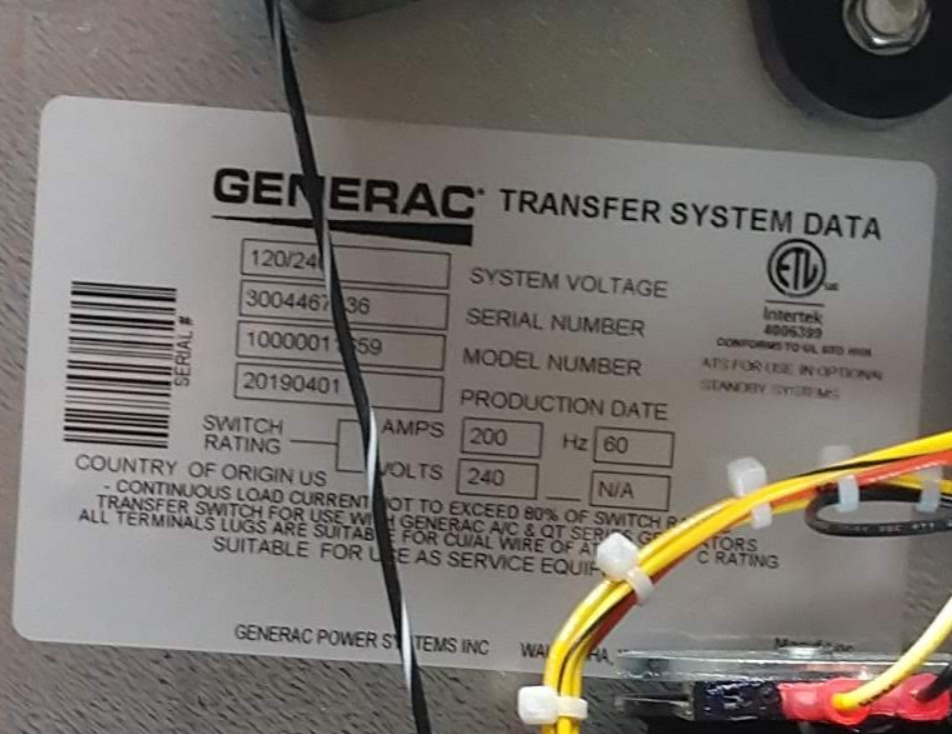
A generator is not a separately derived system if it does not switch the grounded (neutral) conductor, and instead keeps it solidly connected to the utility system.
What this means in plain language:
If the neutral is not interrupted, and the generator’s output stays electrically connected to the service neutral (even through a transfer switch), then the system is not considered separately derived.
➡ In this case, the NEC treats the generator as part of the existing grounding system. That changes what articles apply, particularly referencing 250.34(A) and 110.3(B) for how the equipment should be used.

Important Transition:
The moment a generator is connected to anything more than plug-connected equipment—especially a residence or building via a transfer switch—the system configuration must be reevaluated. This is where SDS vs. non-SDS matters most, and where grounding requirements typically shift.
NEC 250.34 – Does Your Generator Require a Grounding Electrode?
NEC 250.34(A) clarifies that a portable generator does not need to be connected to a grounding electrode system (like a ground rod) if both of the following are true:
- The generator supplies only equipment mounted on the generator, cord-and-plug-connected equipment through receptacles mounted on the generator, or both.
- The normally non-current-carrying metal parts of equipment and the equipment grounding conductor terminals of the receptacles are connected to the generator frame.
BUT: You must always check the manufacturer’s requirements too, to comply with NEC 110.3(B).
NEC 250.30(A) – Requirements for Separately Derived Systems
The grounded conductor (typically the neutral) must be bonded to the system’s grounding point with a system bonding jumper (often at the generator or the first disconnecting means), tying the neutral to the equipment grounding conductors.
- The grounded conductor (typically the neutral) must be bonded to the generator frame using a main bonding jumper
- A grounding electrode conductor (GEC) must be run to a grounding electrode system,
- And the system must meet all applicable conditions related to location of disconnecting means, EGCs, and conductor sizing.
NEC 445.11 – Marking Requirement for Neutral Bonding
NEC 445.11 requires manufacturers to mark generators to indicate whether the neutral is bonded to the generator frame. If that bonding is modified in the field, additional marking is required so it’s clear whether the neutral is bonded or not.:

The neutral conductor of a generator that is bonded to the generator frame shall be identified by a system bonding jumper connected between the neutral and the generator frame. The identification shall be legible and of sufficient durability to withstand the environment involved.
This marking helps determine whether the bonding jumper is already installed, and whether it needs to be added or removed depending on whether the system is SDS or not. It also helps inspectors quickly verify field configuration without dismantling the generator panel.
NEC 110.3(B) – Follow Manufacturer Instructions
One of the most enforced sections of the NEC—yet often overlooked in generator setups—is 110.3(B):
“Listed or labeled equipment shall be installed and used in accordance with any instructions included in the listing or labeling.”
This means:
- You must follow the manufacturer’s instructions for bonding jumper placement, grounding terminals, and grounding conductors.
- If the manual or listing specifies how the generator must be connected, those instructions are enforceable as code.
Understanding Generator Grounding: A Quick Summary for Field Use
The following is a typical statement you might find in the electrical specifications of a portable generator(YOUR GENERATOR MAY BE DIFFRENT)—and it’s worth reading the manufacturer requirements carefully:
“The generator neutral is bonded to the frame. There is a permanent conductor between the generator (stator wire) and the frame. If this generator will be used only with cord and plug equipment connected to the receptacles mounted on the generator, National Electric Code does not require that the unit be grounded. However, other methods of using the generator may require grounding to reduce the risk of shock or electrocution.” – You Must Always Check The Manufacturers Requirements.
Here’s what that actually means, in simplified NEC terms:
- The generator has a neutral-to-frame bond (called a system bonding jumper), making it capable of acting as a separately derived system (SDS) if needed.
- When used only to power cord-and-plug tools from its built-in receptacles, the NEC does not require a ground rod (per 250.34(A))—as long as the equipment grounding terminals are bonded to the frame.
- When connecting to a structure or panel: Evaluate SDS vs. non-SDS and follow NEC 250.30 or 250.6 accordingly.
- This is why manufacturer specs often warn you not to alter the factory bond without fully understanding how the generator will be connected.
In short: The NEC rules are connection-based, not generator-based. If you change how the generator is used, you may also need to change how it’s bonded and grounded—but only in line with both code and the manufacturer’s instructions under NEC 110.3(B).
Parallel Path Hazard: What the Code Says
A neutral-to-ground bond on a non–SDS generator can create parallel paths if the system is wired incorrectly.
This happens when the generator’s neutral is bonded to the frame and the neutral also remains connected to the service neutral. That creates two neutral–ground bonding points. In that condition, normal neutral current can split between the neutral conductor and the equipment grounding conductor, and even flow on the generator frame or any ground rod connected to it.
⚠️ The Result: Objectionable and potentially dangerous current flow which is prohibited by NEC 250.6.
Why This Matters
- Parallel neutral paths reduce fault current on the intended circuit path.
- OCPDs may fail to trip.
- Equipment or frame may carry neutral current, raising shock or electrocution risk.
NEC Reference Points
- NEC 250.6(A): Prohibits objectionable current on grounded metal parts and permits relocation or removal of grounding connections that cause it.
- NEC 250.4(A)(5): Requires a low-impedance fault current path back to the source to ensure breakers or fuses operate as intended.
So, if a ground rod or additional neutral bond is added to a non–SDS generator, it creates a parallel path—which the NEC explicitly seeks to avoid.
Bottom line: For non–SDS systems, the NEC requires only one neutral-to-ground bond—typically at the service panel. Adding another at the generator introduces risk and violates code.
UL 2200 – What It Says (Not Code, But Relevant)
UL 2200 is the standard covering stationary engine generator assemblies. It is not an NEC code section, but manufacturers design to this standard, and it influences how bonding and grounding terminals are configured at the factory.
Key notes from UL 2200:
- Many residential and light commercial generators are factory-configured with the neutral bonded to the frame. This bond alone does not make the generator an SDS; SDS classification depends on whether the transfer equipment switches the neutral, as defined by the NEC.
- UL 2200 requires manufacturers to provide a marked terminal for connecting a grounding electrode conductor (GEC), but whether that terminal must be used is determined by the installation, by the manufacturer, and by NEC rules such as 250.30 and 250.34.
- Installation manuals typically specify when the neutral-to-frame jumper must remain in place or be removed—especially when connecting the generator to service equipment where a neutral-ground bond already exists.
Again, UL 2200 isn’t code—but it drives what manufacturers require in their installation manuals. And under 110.3(B), those instructions become enforceable.
NEC 445.20 – GFCI Protection for Portable Generator Receptacles
Another section not to miss is NEC 445.20, which requires:
Receptacle outlets that are part of a 15-kW or smaller portable generator shall have listed GFCI protection for personnel integral to the generator or the receptacle, as specified in 445.20(A) for unbonded (floating neutral) generators and 445.20(B) for bonded neutral generators.
What that means:
- All standard 5-15 and 5-20 style outlets on a 15-kW or smaller portable generator must include Class A GFCI protection, whether the system is SDS or not.
- GFCI is not typically required for 125/250 V twist-lock (L14-30, etc.) receptacles, unless dictated by the generator listing or local AHJ.
- Manufacturers comply with this using onboard GFCI outlets and, in some cases, disabling them when the locking receptacle is energized (per UL 2201 standards).
This ensures shock protection for personnel using common extension cords and tools connected directly to the generator.
Purpose of Grounding Electrodes in SDS Generator Systems
When the NEC requires a grounding electrode for a portable generator, it’s not for fault clearing — breakers and the equipment grounding conductor clear faults. In an SDS setup, the generator becomes a separately derived source, so 250.30 requires it to be connected to a grounding electrode system for system stabilization and reference to earth. The rod has nothing to do with creating a low-impedance fault path; that comes from the neutral bond and the EGCs in the system.
Here’s what the ground rod actually does:
- Stabilizes voltage during surges
- Helps protect equipment during lightning strikes or sudden voltage spikes by giving electricity a place to go.
- Keeps the generator frame close to earth potential
- Prevents the frame from “floating” at a dangerous voltage if something goes wrong.
- Provides a reference point for the electrical system
- Especially if required in SDS setups, the system needs a known connection to ground to stay balanced and predictable.
- Helps meet NEC requirements for grounding SDS systems
- NEC 250.30(A)(5) calls for a grounding electrode to be connected when the generator is set up as a separately derived system.
- Adds a layer of safety in case of larger faults
Here’s What Clears a Fault in an SDS Generator System:
1. System Bonding Jumper (Neutral-to-Frame Bond)
This bond is installed at the generator’s neutral terminal and connects it to the generator frame.
It creates the reference point for all grounded conductors and establishes the path for fault current.
2. Equipment Grounding Conductor (EGC)
When a ground fault occurs (e.g., a hot conductor contacts the metal frame or an appliance chassis), the fault current travels through the EGC back to the generator’s frame.
From there, it completes the loop to the neutral terminal via the system bonding jumper.
3. Overcurrent Protection Device (OCPD)
Once that current loop is complete, the fault current is high enough to trip the circuit breaker or blow a fuse protecting the circuit.
The key is that the loop has low impedance, allowing enough current to flow for fast trip time.
Portable Generator Bonding & Grounding Example
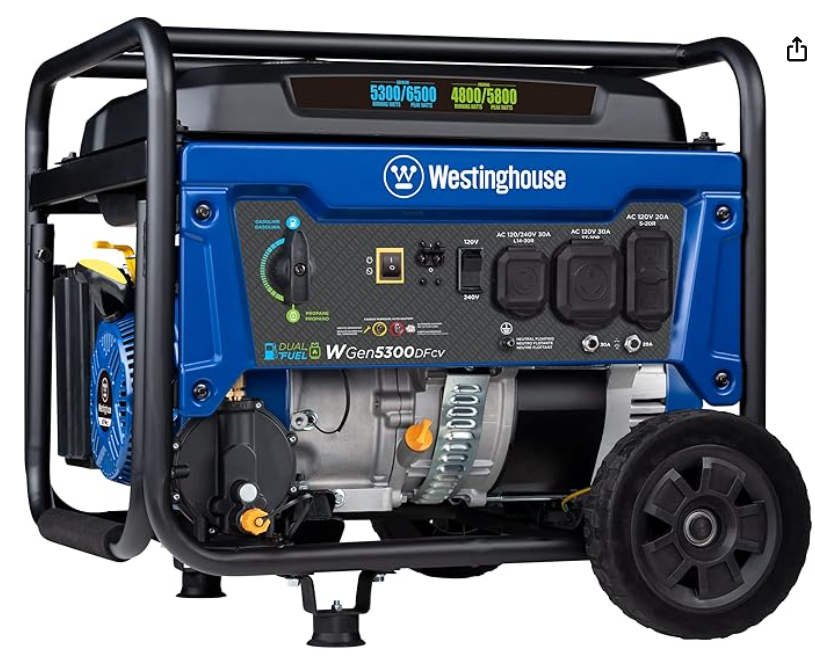
I recently installed the Westinghouse 6500-Watt Dual Fuel Generator paired with a Reliance Controls 6-Circuit Transfer Switch at my church. It was an economical and straightforward solution for maintaining key circuits during power outages, including lights, heating, and sump pumps. The generator includes a 30A outlet that’s transfer-switch ready, which made hookup simple using a UL-listed manual transfer switch. Just keep in mind: per NEC 702.5(A), optional standby systems must use interconnection or transfer equipment that’s listed and installed so as to prevent inadvertent interconnection with the utility supply. This setup satisfied that requirement.
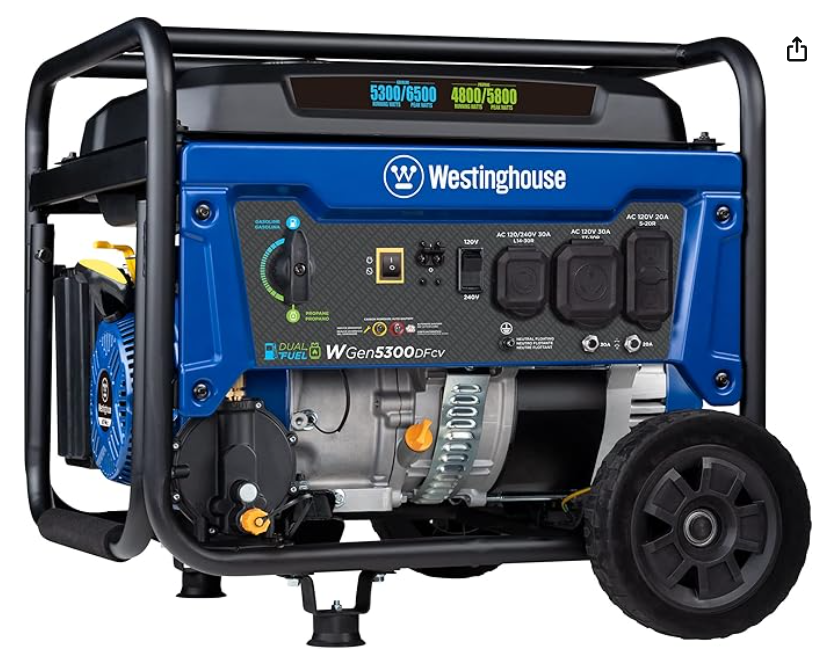
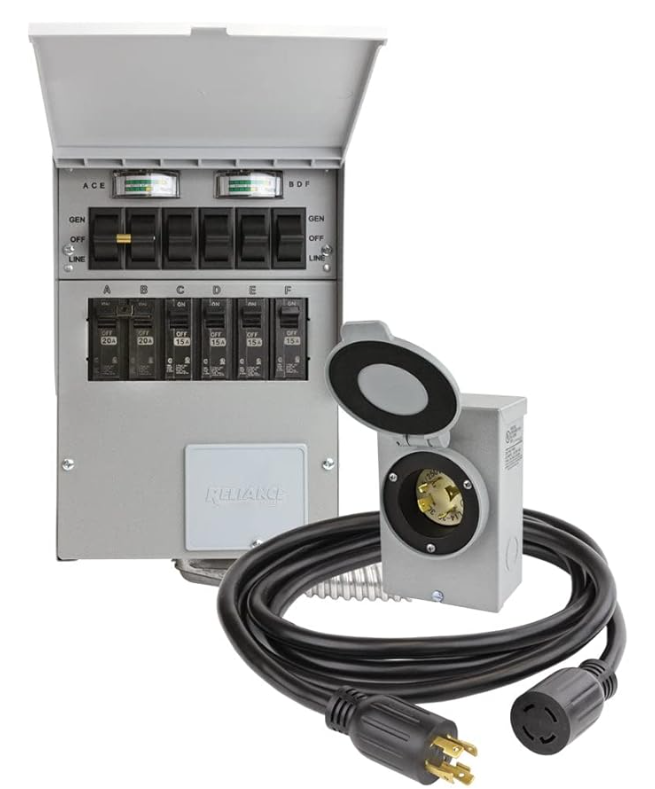
Also, because this unit is manufactured with a floating neutral, and the neutral wasn’t switched, it’s not considered a separately derived system—so under NEC 250.34(B), as long as the conditions in 250.34(A)(1) and (A)(2) are met and per the manufacturer’s instructions, no separate grounding electrode system was required.
If you’re interested in the setup I used, here’s the exact generator and transfer switch combo I used—both worked great and were cost-effective options:
Westinghouse 6500W Dual Fuel Generator
Reliance 6-Circuit Transfer Switch (306CRK)
Important: Always follow the National Electrical Code and your local AHJ requirements. Portable generator setups must be configured correctly to ensure safety—not just for your equipment, but for everyone working on or near the system during an outage. Understand how your generator is wired before connecting it to your home or using cord and plug equipment.
As an Amazon Associate, I earn from qualifying purchases—at no extra cost to you. It helps support this site and keeps the code tips coming!
Final Thoughts
The NEC doesn’t ask what type of generator you’re using—it asks how you’re using it.
- Start with whether the neutral is switched.
- Then check SDS vs. non-SDS, NEC, and manufacturer requirements.
- Match your setup to the correct code section.
And always remember: If the manual says it, and it’s listed, NEC 110.3(B) says you follow it.
If you’re also working with pools or outdoor bonding setups, check out our detailed Pool Bonding Inspection Guide.
Watch the Full Walkthrough: Portable Generator Bonding & Grounding Explained
If you want to see this setup in action—including the floating-neutral test, how the transfer switch uses the service neutral bond, and how the NEC sections apply in the field—watch the full video below. I walk through the exact Westinghouse generator and Reliance transfer switch we installed at my church and explain the bonding and grounding requirements step-by-step.