
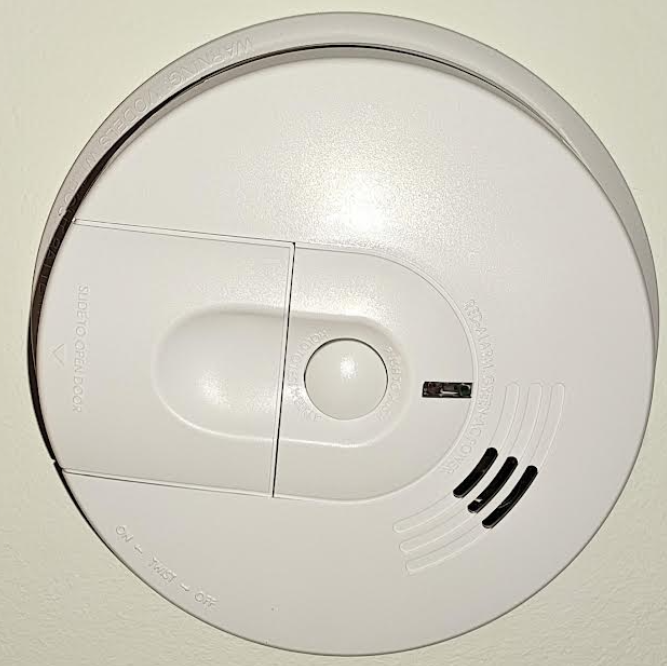
Smoke detector placement IRC R314 is one of the most overlooked details in code compliance, but it’s a critical life safety measure for every home.
If you want a sure-fire way to fail your final inspection, misplace a smoke alarm or skip a CO detector. But let’s get this straight: these devices aren’t just a code headache—they’re proven lifesavers. They buy you precious minutes—when, without them, you might only have seconds.
According to the National Fire Protection Association, nearly 3 out of 5 home fire deaths happen in homes without working smoke alarms. Carbon monoxide? It’s silent, odorless, and every year, it kills hundreds—often while families are sleeping.
Translation: Cutting corners here is not just a code fail—it’s dangerous.
Why Are These Rules So Strict?
Because code is written in the aftermath of tragedies. Every line in R314 and R315 is there because someone missed it, and people got hurt. The only thing worse than failing inspection is being the house in the news.
So—let’s break down where, what, and how to install (and pass!) smoke and CO alarms.
Smoke Detector Placement IRC R314 and R315: Required Locations (2021 Code)
Let’s cut to the chase—here’s what the code actually says.
Smoke Alarms (R314.3)
- In every sleeping room (bedroom)
- Outside each sleeping area (typically in the hallway)
- On every story of the home, including basements and habitable attics (not crawlspaces/uninhabitable attics)
- Not within 3 feet of a bathroom door with a shower/tub
- In hallways and any room open to a hallway if the ceiling height is 24”+ higher than the hallway
- Split-levels? As long as there’s no door between levels, a smoke alarm on the upper level covers both if the drop is less than a full story.
CO Alarms (R315.3)
- Outside each sleeping area, in the immediate vicinity of bedrooms
- Inside a bedroom if there’s a fuel-burning appliance or attached bath with one
- On every story with a sleeping room, or any level with fuel-burning appliances or attached garage
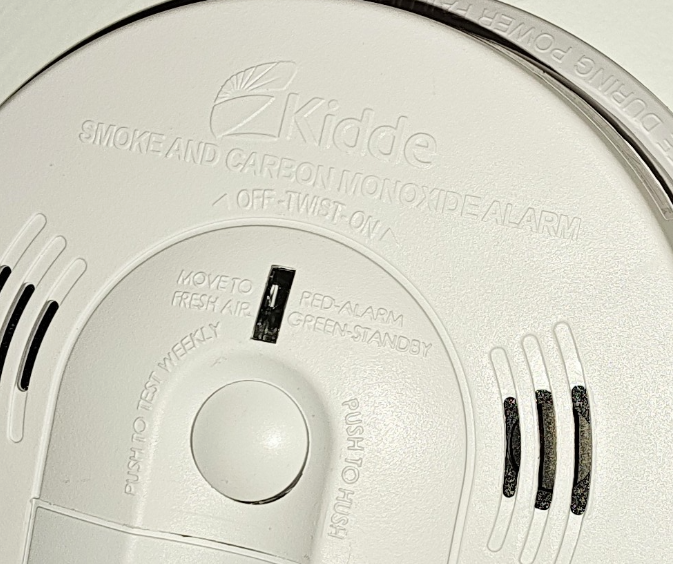
Smoke & CO Alarms in Remodels and Additions: Hardwired vs. Battery-Only (Common Source of Confusion)

This is one of those areas that causes real-world frustration for contractors, DIYers, and even seasoned pros—especially when local AHJ’s have their own interpretations.
Here’s what you need to know—simplified and code-cited:
The Core Rule:
- New construction or major remodels/additions:
- All required smoke and CO alarms must be hardwired (120V), interconnected, and have battery backup.
- Smaller remodels/repairs:
- If you don’t open walls/ceilings (so no access for new wiring), you’re generally allowed to install battery-only or wireless interconnected alarms.
- But:
- If you do open finishes and it’s practical for an electrician to run new wiring, the code and inspectors expect you to upgrade to hardwired, interconnected devices for better safety (redundancy from both 120V and battery).
Interconnection (Wired or Wireless)
- When more than one alarm is required, they must be interconnected (wired or listed wireless).
- Physical interconnection (wiring) is not required if listed wireless alarms are used and all alarms sound together.
- Exception: If you aren’t removing interior finishes, and/or there’s no attic/crawlspace/basement access for new wiring, battery-only wireless interconnected alarms are allowed for retrofit.
The AHJ Reality:
- Many AHJs (your local building department) can and do require stricter standards—sometimes insisting on hardwired, interconnected alarms even in remodels if, in their judgment, it’s “practically feasible.”
- If the inspector sees that walls/ceilings are open or that it would be feasible for a licensed electrician to install hardwired alarms, expect to be required to do so.
- Bottom line: Always check local requirements and err on the side of hardwired/interconnected if there’s any doubt. Safety and redundancy matter.
Best Practice:
Whenever possible—especially if you have open walls or an accessible attic/crawlspace—install hardwired, interconnected alarms with battery backup.
This provides the best safety (120V + battery redundancy) and keeps you compliant with both the code and most AHJ interpretations.
10-Year Sealed Battery Alarms: Local Amendments & Industry Trend
Some states and AHJs now require 10-year sealed battery alarms for retrofits or existing homes (California, New York, Illinois among them).
- 2021 IRC does not mandate 10-year batteries nationally.
- Always check your local code or ask your AHJ.
A lot of home inspectors are now flagging non-sealed battery smoke alarms on existing homes—even when state code doesn’t require them. It’s part of the industry trend toward lower maintenance and fewer dead batteries.
How Far From Kitchens and Bathrooms? – Avoiding Nuisance Alarms
- Photoelectric smoke alarms: Not within 6 feet of a permanently installed cooking appliance (R314.3.1[3])
- Ionization smoke alarms: Not within 20 feet of cooking appliance (R314.3.1[1]); with hush feature: 10 feet (R314.3.1[2])
- No smoke alarm within 3 feet of a bathroom door with a shower or tub (R314.3[4])
Why?
Put an ionization alarm too close to the toaster, and you’ll get nuisance alarms (and angry customers). Use the right alarm and right distance, and everyone’s happier.
Mounting Near Walls, Corners, Vaulted Ceilings & HVAC Vents

When it comes to where you physically mount your smoke and CO alarms, the details matter just as much as the locations in the code.
- On pitched or cathedral (vaulted) ceilings, alarms should be located at or near the highest point of the ceiling, or on the sloped portion within 12 inches down from the peak.
- For wall-mounting (when permitted), the top edge of the alarm should be between 4 and 12 inches from the wall/ceiling intersection—avoiding the dead-air zone at the very top corner.
- Alarms should never be installed within the airflow path of supply registers from forced-air HVAC systems. Industry guidance recommends staying at least 36 inches away from supply diffusers and keeping units out of direct airflow.
- On remodels or inspections, if you see an alarm tucked right next to a ceiling supply vent, or installed low in a corner under a vaulted ceiling’s peak, it may still meet the minimum code location but can fail the real-world test: the airflow might delay smoke reaching the sensor, or push smoke past it altogether.
You must always follow the manufacturer’s requirements for placement and mounting.
If there’s a conflict between code and the device’s manual, the most restrictive rule applies.
Real-World Challenges (Straight from the Field)
- Remodeler’s trap: Don’t just slap in battery alarms because “it’s a pain to run wire.” If you open walls/ceilings—substantially—you must wire, interconnect, and provide battery backup, per code.
- Inspector’s catch: Interconnected, but not actually tested? If one alarm sounds and the others don’t, it’s a red tag. Test every install before the call—this is a common miss, especially on wireless interconnected devices.
- Homeowner’s miss: “I just painted, so I’ll wait on alarms.” Fail. Alarms must be up for final inspection—this is a life safety issue—no exceptions.
Brand Note: First Alert in the Field
For remodels and retrofits where battery-operated, wireless-interconnected smoke and CO alarms are allowed, I’ve seen First Alert devices along with other devices installed and tested on several inspections. First Alert is widely recognized as an industry-standard, life safety brand, trusted by professionals nationwide. When set up correctly, the First Alert brand alarms have operated as intended—including passing the wireless interconnect test required by code.
I’ve also heard from electricians in the field that it can be tough to find reliable, battery-operated wireless interconnected units when you need them. To make things easier, I’ve included a direct link to a First Alert detector below.
Affiliate disclosure: As an Amazon Associate I earn from qualifying purchases. Using my link helps support BuildingCodeGeek.com at no extra cost to you.
First Alert SM500V, Interconnect Battery-Operated Smoke Alarm
Checklist: Don’t Fail Your Inspection
✓ Smoke alarms: Bedroom, outside sleeping area, every level (habitable), not too close to kitchen or baths
✓ CO alarms: Outside sleeping areas, every story with bedroom/fuel appliance/garage, inside bedroom if appliance present
✓ Interconnected: Wired or listed wireless (new/remodels); see exceptions for finished spaces
✓ Power: 120V with battery backup (new); battery-only OK in certain retrofits per code
✓ If required—10-year sealed battery: Check local code (AHJ)
✓ Always follow manufacturer instructions and local amendments
Want to make sure your electrical panel also passes inspection?
Check out my step-by-step guide:
Electrical Panel Clearance Code: NEC 110.26 Explained for Homes and Garages
FAQs: The Questions Inspectors, Electricians, and Homeowners Actually Ask
Q: Can I use battery-only smoke or CO alarms in a remodel?
A: Only if you’re not opening up the walls/ceilings or don’t have access to run new wiring. Most AHJs allow battery-only (interconnected wireless) for true retrofits.
Q: Are 10-year sealed battery alarms required everywhere?
A: No—2021 IRC does not require them, but your state or local code might. Always check before installing.
Q: Is a combo smoke/CO alarm allowed?
A: Yes—must be UL 217 & UL 2034 listed, installed at all required locations for both smoke and CO.
Q: What about unfinished basements, garages, crawlspaces?
A:
Smoke alarms: required in habitable basements, not in crawlspaces/unfinished attics
CO alarms: required if there’s a sleeping area, fuel-burning appliance, or attached garage
Inspector’s Field Insight
Want a hassle free easy inspection? Read R314 and R315, check local amendments, and test your installs—before you call for the final. Most code fails are due to ignoring or mis-interpreting these code requirements.