This article is written to the 2021 International Mechanical Code (IMC) and NFPA 96 (2021). Local amendments and AHJ interpretations may apply.
Type I hood requirements aren’t based on kitchen size or how busy the operation feels — they’re triggered by what the cooking equipment actually produces.
If you’ve ever been surprised by a failed commercial kitchen inspection, there’s a good chance it started right here — the hood type.
I’ve seen it plenty of times:
“The kitchen isn’t that big.”
“We don’t cook that much.”
“The HVAC contractor said this hood was fine.”
None of that matters during inspection.
What matters is what the cooking equipment produces — and the code is very clear about that.
The Real Trigger Isn’t Size — It’s Grease
Commercial kitchen ventilation isn’t based on square footage or how busy the restaurant feels. It’s based on whether the cooking process produces grease-laden vapors.
Once grease is involved, the codes treat that as a fire hazard, not just an air-quality issue.
That’s where the line gets drawn between:
- Type I hoods
- Type II hoods
And inspectors don’t get flexibility here.
Where the Code Draws the Line
The International Mechanical Code (IMC) sets the baseline for when a Type I hood is required.
The Type I hood requirements in the 2021 IMC are driven by grease and smoke — not square footage or menu size.
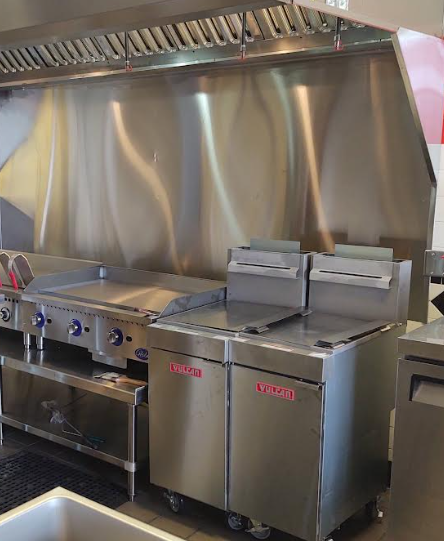
The 2021 International Mechanical Code (IMC) 507.2 requires a Type I hood where cooking appliances produce grease or smoke.
That one sentence drives a lot of inspection outcomes.
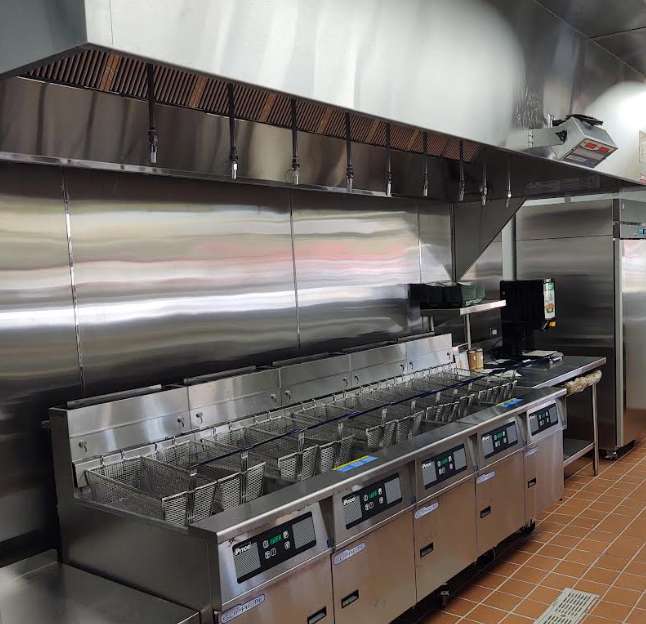
If the equipment produces grease-laden vapors — fryers, griddles, ranges, charbroilers, woks — the IMC already expects a Type I hood. There’s no workaround in the mechanical code for that condition.
Once a Type I hood is triggered, the fire code side immediately comes into play.
Why NFPA 96 Enters the Picture
As soon as grease is involved, inspectors aren’t just thinking airflow — they’re thinking fire spread.
That’s where NFPA 96 takes over.
NFPA 96 governs:
- Grease containment
- Hood construction
- Grease filters
- Duct construction
- Fire suppression systems
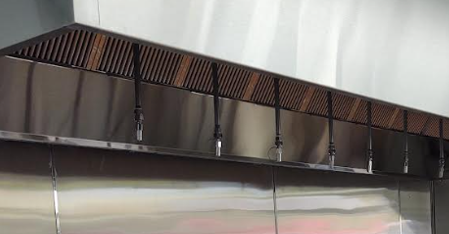
NFPA 96 Section 4.1.1 makes it clear that systems serving grease-producing appliances must be designed to capture, contain, and remove grease-laden vapors.
In other words, once grease enters the air stream, the entire system — from hood to fan — is treated as a fire-protection assembly.
This is why Type I hoods aren’t optional upgrades. They’re part of the fire safety system.
Why Type I Hoods Are Different (And Cost More)
A Type I hood isn’t just a box with a fan.
Code-wise, it requires:
- Grease-rated construction
- Listed grease filters or other listed grease removal devices (NFPA 96 (2021) 6.1.1), with removable filters/devices listed in accordance with UL 1046
(NFPA 96 (2021) 6.1.2) - Welded, liquid-tight grease ducts (NFPA 96, Chapter 7)
- An automatic fire suppression system tied to the hood
And that suppression system isn’t standalone either.
NFPA 96 (2021) 11.3 requires that, upon actuation of the fire-extinguishing system, fuel or electrical power that produces heat to cooking appliances is automatically shut off.
From an inspection standpoint, this all functions as one system, not a collection of parts.
Why a Type II Hood Won’t Pass “Just This Once”
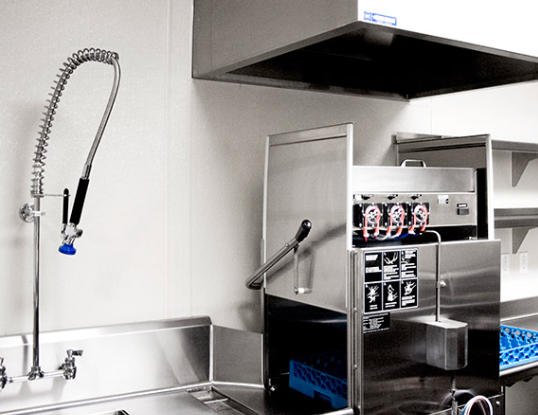
This is one of the most common field arguments I hear:
“It’s only a small fryer.”
“We barely use it.”
“It’s mostly heat, not smoke.”
None of that changes the classification.
A Type II hood is intended only for:
- Heat
- Steam
- Moisture
- Products of combustion (where no grease or smoke is produced)
IMC Section 507.3 limits Type II hoods to appliances that do not produce grease or smoke.
Once grease is present, a Type II hood is no longer code-compliant — regardless of airflow, size, or how new the equipment is.
From an inspector’s seat, that’s not a judgment call. It’s a mismatch between equipment and hood classification.
“Panini grills” are commercial cooking equipment typically used for grilling sandwiches, and this is one of those gray-area issues that comes up regularly in the field. The code doesn’t classify equipment by name — it looks at what the cooking process actually produces. If a panini grill produces only heat and steam and no grease, it can be ventilated with a Type II hood. Once grease-laden vapors or smoke are produced — such as when cooking fatty meats — that same panini grill may trigger a Type I hood requirement under IMC and NFPA 96.
That said, local AHJ interpretation matters. Some jurisdictions take a stricter view of contact grills regardless of menu, while others evaluate them strictly based on observed grease or smoke production. This is one area where the code sets the framework, but the final call is often made by the AHJ.
How Inspectors Actually Decide in the Field
Inspectors don’t rely solely on plans or equipment cut sheets. They look at:
- What appliances are installed
- How the appliances are used
- Whether grease is produced
- What hood is installed above them
- Whether suppression is present and interlocked
If grease-producing equipment is under a hood without fire suppression, the inspection usually stops right there.
No amount of CFM math fixes a missing Type I hood.
For a deeper look at how inspectors evaluate compliance — and why the NEC isn’t a how-to manual — check out NEC Is Not a How-To Manual: How Inspectors Determine Code Compliance. It breaks down the inspection mindset and code interpretation logic in real-world terms.
The Bottom Line
If the cooking process produces grease:
- The IMC triggers a Type I hood
- NFPA 96 triggers fire protection requirements
- Suppression, duct construction, and clearances all follow
This isn’t about overkill. It’s about how the codes separate comfort ventilation from fire containment.
In the next post, we’ll line up Type I vs Type II hoods side-by-side and walk through real examples that cause inspection failures.
Get the Right Code Guide for the Job
Tired of code confusion, inspection fails, or second-guessing your wiring? These practical field guides and checklists are built for pros, contractors, and serious DIYers—clear, code-cited, and inspection-tested. Grab the resource that fits your next project:
Available Guides:
My book with clear explanations, diagrams, and field checklists to help you wire it right the first time and pass every inspection. Covers NEC 2020 & 2023, written for real-world job sites.