
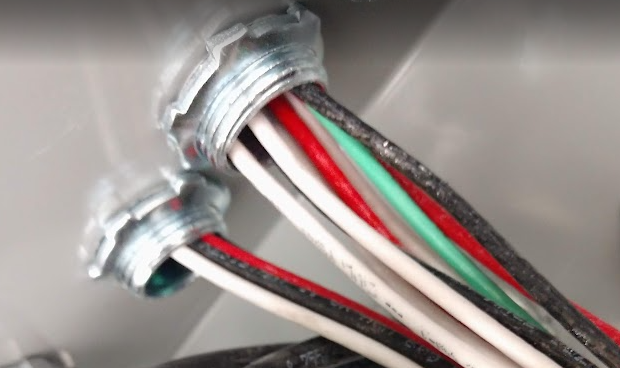
Understanding conduit fill ampacity requirements is where many installations go sideways in the field.
Conduit fill and conductor ampacity are not the same NEC evaluation.
An electrician checks the raceway fill, sees the conductors physically fit within Chapter 9 limits, and assumes the installation is compliant.
But conduit fill compliance does not automatically mean ampacity compliance.
This is one of the most common conductor installation mistakes inspectors continue to see in both commercial and residential work.
Especially when multiple circuits are installed in the same raceway.
Governing NEC Section
The controlling section for conductor ampacity adjustment is:
NEC 310.15(C)(1) — Adjustment Factors
This section applies when more than three current-carrying conductors are installed together in a raceway, cable, or bundled arrangement.
That trigger condition matters.
Not total conductors.
Not conduit size.
Current-carrying conductors.
What Conduit Fill Actually Evaluates
Chapter 9 conduit fill rules determine:
- Whether the conductors physically fit in the raceway
- Maximum allowable fill percentages
- Raceway space limitations
That’s all.
Chapter 9 does not determine whether the conductors can legally carry the connected load after ampacity adjustment is applied.
Those are separate NEC evaluations.
A raceway can comply with conduit fill requirements and still fail because conductor ampacity was not properly adjusted under NEC 310.15(C)(1).
The “More Than 3 Current-Carrying Conductors” Rule
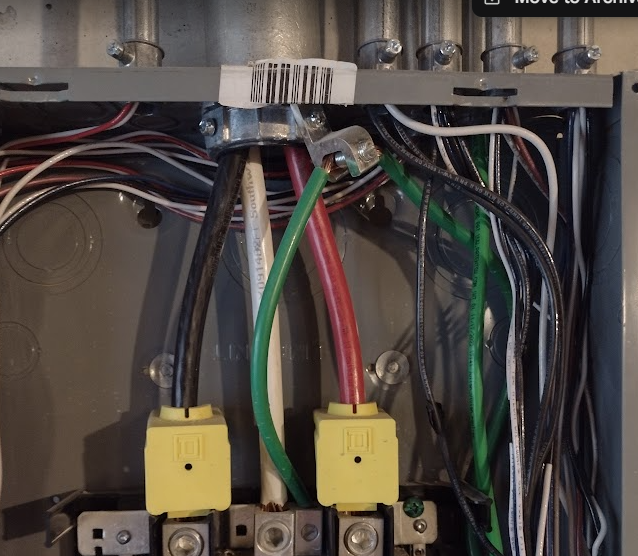
Once more than three current-carrying conductors are installed in the same raceway or bundled arrangement, NEC 310.15(C)(1) requires conductor ampacity adjustment.
The issue is not whether the conductors fit.
The issue is heat.
As additional current-carrying conductors are grouped together, heat dissipation changes, and conductor ampacity must be adjusted accordingly.
The NEC adjustment factors commonly applied are:
- 4–6 current-carrying conductors → 80%
- 7–9 current-carrying conductors → 70%
- 10–20 current-carrying conductors → 50%
As conductor count increases, allowable ampacity decreases.
That’s the part many installers miss.
Why Some Installations Still Work at 7–9 Conductors
This is where understanding the actual calculation matters.
A lot of electricians hear that ampacity adjustment applies and assume the installation automatically fails.
That’s not necessarily true.
For example:
#12 copper THHN is rated:
- 30 amps in the 90°C column of Table 310.16
If there are 7–9 current-carrying conductors in the raceway, the adjustment factor becomes 70%.
30A × 70% = 21A adjusted ampacity
That still supports a 20-amp circuit.
And it also still supports a 15-amp circuit.
This is why many installations with 7–9 current-carrying conductors still work without conductor upsizing.
The conductors physically fit in the conduit — and the adjusted ampacity still remains above the circuit rating.
But once conductor count increases again, the outcome changes.
Example: When Conduit Fill Passes But Ampacity Fails
Assume:
- 10 current-carrying #12 copper THHN conductors
- Installed in 3/4-inch EMT
- 20-amp branch circuits
- 75°C terminations where permitted
Conduit Fill Side
Ten #12 THHN conductors can physically fit inside 3/4-inch EMT under Chapter 9 conduit fill limits.
So the conduit fill side passes.
Ampacity Side
#12 copper THHN is rated:
- 30 amps in the 90°C column of Table 310.16
But because there are now 10 current-carrying conductors in the raceway, NEC 310.15(C)(1) requires a 50% adjustment factor.
30A × 50% = 15A adjusted ampacity
Now the conductor ampacity is reduced to 15 amps.
So even though the conduit fill complies, the conductors no longer support a 20-amp circuit.
That’s the issue.
The raceway physically works.
The ampacity no longer does.
However, this same adjusted ampacity would still support a 15-amp circuit.
That’s why the actual conductor count and circuit rating both matter during ampacity evaluation.
Why Electricians Often Upsize Conductors in Commercial Work
This is one reason you’ll often see electricians pull #10 conductors in a 3/4-inch EMT raceway for circuits many installers would normally expect to be wired with #12 conductors.
At first glance, the #12 conductors may appear acceptable because the conduit fill complies with Chapter 9.
But conduit fill is only part of the NEC evaluation.
Once a certain number of current-carrying conductors are grouped together in the same raceway, NEC 310.15(C)(1) requires ampacity adjustment.
That changes the allowable ampacity of the conductors.
For example:
#12 copper THHN is rated:
- 30 amps in the 90°C column of Table 310.16
If the raceway contains 10 current-carrying conductors, the required adjustment factor becomes 50%.
Calculation:
30A × 50% = 15A adjusted ampacity
Now the #12 conductor no longer supports a 20-amp circuit.
That is why the conductor gets upsized.
By increasing the conductor from #12 to #10, the adjusted ampacity changes:
#10 copper THHN is rated:
- 40 amps in the 90°C column
40A × 50% = 20A adjusted ampacity
Now the conductor can again support the 20-amp circuit after ampacity adjustment is applied.
That’s why upsized conductors are extremely common in commercial conduit installations where multiple branch circuits share the same raceway.
The conduit may physically allow the smaller conductor.
But the installation conditions may no longer allow the smaller conductor ampacity.
Understanding Conduit Fill Ampacity Requirements
This is where many field mistakes happen.
NEC 310.15(C)(1) is based on current-carrying conductors, not simply the total number of wires in the raceway.
Equipment grounding conductors do not count as current-carrying conductors.
But grounded conductors are different.
A neutral conductor is not automatically excluded just because it is white or gray. If that grounded conductor carries load current under the installation conditions, it must be evaluated as a current-carrying conductor.
That distinction matters.
In the field, the question is not:
“How many wires are in the pipe?”
The question is:
“How many of these conductors are current-carrying conductors under NEC 310.15(C)(1)?”
That is what determines the adjustment factor.
This Also Connects Back to Termination Ratings
The 90°C conductor rating is often permitted to be used for ampacity adjustment calculations.
But that does not automatically permit the final conductor ampacity to be based on the 90°C column.
Final allowable ampacity is still limited by the conductor termination rating under NEC 110.14(C).
That means:
- Ampacity adjustment may reduce ampacity first
- Termination limitations may still cap the final allowable ampacity afterward
Both conditions must be evaluated.
I broke this down further in another article explaining why conductor insulation ratings do not automatically determine allowable ampacity:
Conductor Ampacity: Why Termination Ratings — Not Wire Insulation — Control the NEC Limits
What Inspectors Are Looking For
In the field, inspectors are generally evaluating:
- How many current-carrying conductors are installed?
- Does NEC 310.15(C)(1) apply?
- Was conductor ampacity properly adjusted?
- What termination rating controls under NEC 110.14(C)?
- Does the final adjusted ampacity still support the circuit load and overcurrent protection?
If the adjusted conductor ampacity no longer supports the installation:
It fails.
Even if the conduit fill itself is compliant.
Bottom Line
Conduit fill and conductor ampacity are separate NEC evaluations.
Chapter 9 determines whether conductors physically fit in the raceway.
NEC 310.15(C)(1) determines whether conductor ampacity must be adjusted because of heat generated by multiple current-carrying conductors.
A raceway can pass conduit fill rules and still fail ampacity requirements.
That’s one of the most common conductor installation mistakes inspectors continue to see in the field.
Get the Right Code Guide for the Job
Tired of code confusion, inspection fails, or second-guessing your wiring? These practical field guides and checklists are built for pros, contractors, and serious DIYers—clear, code-cited, and inspection-tested. Grab the resource that fits your next project:
Available Guides:
• Pass the Inspection: A Field Guide to GFCI & AFCI Code Requirements My book with clear explanations, diagrams, and field checklists to help you wire right the first time and pass every inspection. Covers NEC 2020/2023, written for real-world job sites.
• Kitchen GFCI & AFCI Requirements Checklist (NEC 2020 & 2023 Field Guide)
• Laundry Area GFCI & AFCI Requirements Checklist (NEC 2020 & 2023 Field Guide)
• Garage & Outdoor GFCI Requirements Checklist (NEC 2020 & 2023 Field Guide)