
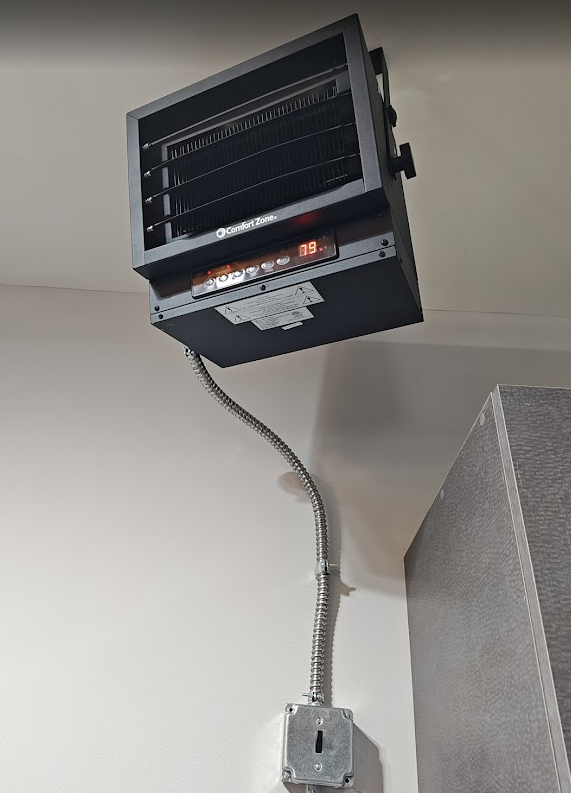
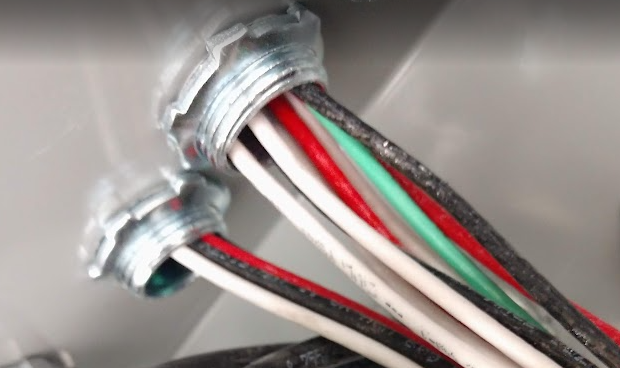
Continuous load and conductor bundling rules are a common point of confusion in the field, especially when both NEC evaluations apply to the same branch circuit.
Many electricians understand the 125% continuous-load requirement. Many also understand conductor ampacity adjustment for more than three current-carrying conductors. But confusion starts when both conditions exist at the same time.
That is where a lot of installations can fail inspection.
One installer applies the continuous-load rule and stops there. Another installer applies conductor derating but overlooks the continuous-load sizing requirement. Others assume one NEC rule somehow replaces the other.
It does not.
The NEC treats these as separate evaluations. Both requirements may apply simultaneously, and both must be satisfied.
This is where understanding NEC sequence matters.
Continuous Load Rules Are One NEC Evaluation
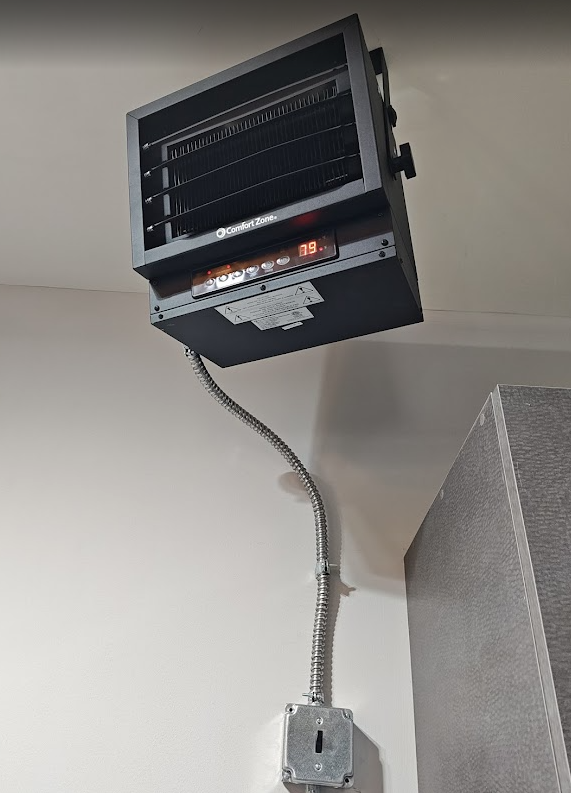
Under Article 100, a continuous load is:
“A load where the maximum current is expected to continue for 3 hours or more.”
Once that condition exists, branch-circuit sizing rules change.
Under NEC 210.19(A)(1), branch-circuit conductors must have an ampacity not less than the noncontinuous load plus 125 percent of the continuous load.
Under NEC 210.20(A), the overcurrent device must also be sized not less than 125 percent of the continuous load.
This is an NEC load-sizing evaluation.
It establishes the minimum branch-circuit capacity required for the load condition.
Conductor Bundling Is a Separate NEC Evaluation
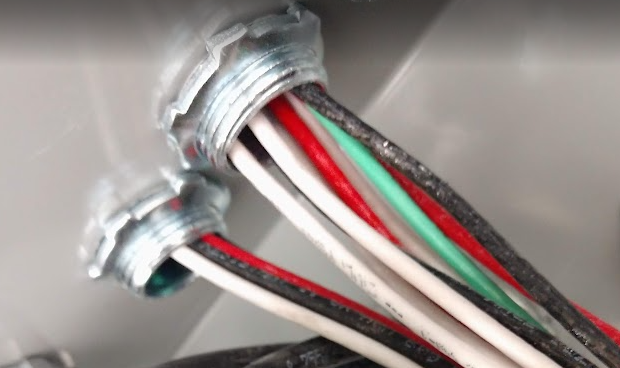
A completely different NEC evaluation occurs when more than three current-carrying conductors are installed together in a raceway, cable, or bundled condition.
Under NEC 310.15(C)(1), conductor ampacity adjustment factors apply when more than three current-carrying conductors are installed together under the conditions specified by the section.
This rule addresses heat accumulation.
As conductor count increases, heat dissipation decreases. The NEC responds by requiring conductor ampacity adjustment.
This does not change the actual load.
It changes the allowable ampacity of the conductor under those installation conditions.
Again, this is separate from continuous-load sizing.
One rule does not replace the other.
The Core NEC Distinction
Continuous-load rules establish the REQUIRED ampacity.
Conductor adjustment factors evaluate the ALLOWABLE ampacity.
The final conductor selection must satisfy both.
The NEC Sequence Most People Get Wrong
The NEC does not explicitly prescribe a calculation sequence here, but the required branch-circuit ampacity must first be established before conductor adjustment compliance can be properly evaluated.
You cannot evaluate whether a conductor still has sufficient allowable ampacity until the required branch-circuit ampacity has first been determined.
That is the real logic chain behind the NEC evaluation.
The sequence generally unfolds like this:
Determine the Actual Load
Start with the actual calculated or nameplate load.
This establishes the load the branch circuit must serve.
Determine Whether Continuous-Load Rules Apply
If the load is expected to operate at maximum current for 3 hours or more, the continuous-load rules are triggered.
This activates the 125% sizing requirements under NEC 210.19(A)(1) and 210.20(A).
Establish the Required Branch-Circuit Ampacity
Once the continuous-load requirement is applied, the NEC establishes the minimum required conductor and overcurrent-device sizing.
At this point, the required ampacity has been established.
Evaluate Conductor Adjustment Requirements
Next, determine whether conductor adjustment factors apply under NEC 310.15(C)(1).
This depends on installation conditions such as:
- Number of current-carrying conductors
- Raceway installations
- Bundled conductor installations
This is a separate NEC evaluation from the continuous-load requirement.
Verify the Adjusted Conductor Ampacity Still Complies
After applying any required adjustment factors, the conductor must still provide sufficient ampacity for the required load.
This is where many installations fail.
An installer may correctly size for continuous load but overlook the reduction in allowable ampacity caused by conductor bundling.
Or the installer may verify conduit fill compliance and incorrectly assume ampacity compliance automatically follows.
This is where many installations get misunderstood in the field. A raceway can physically comply with Chapter 9 conduit fill requirements and still fail NEC ampacity requirements once conductor adjustment factors under NEC 310.15(C)(1) are evaluated. For a deeper breakdown of that distinction, see: “Why Your Conduit Can Pass Fill Rules and Still Fail Ampacity Requirements.” Why Your Conduit Can Pass Fill Rules and Still Fail Ampacity Requirements
It does not.
Conduit fill and conductor ampacity are separate NEC evaluations.
Example NEC Evaluation: Continuous Load Plus Bundled Conductors
Assume this installation:
- 20A continuous load
- THHN copper conductors
- Six current-carrying conductors in EMT
- 75°C terminations
- No other correction factors addressed in this example
The NEC does not explicitly prescribe a calculation sequence here, but the required branch-circuit ampacity must first be established before conductor adjustment compliance can be properly evaluated.
Under NEC 210.19(A)(1), branch-circuit conductors supplying a continuous load must be sized at not less than 125 percent of the continuous load.
20A × 125% = 25A
So the minimum required branch-circuit conductor ampacity is 25A for the continuous-load requirement.
Now evaluate conductor adjustment requirements.
Because six current-carrying conductors are installed in the raceway, NEC 310.15(C)(1) requires an ampacity adjustment factor.
For 4–6 current-carrying conductors, the adjustment factor is 80%.
Now evaluate #12 copper THHN.
Because THHN is a 90°C-rated conductor, the 90°C column of Table 310.16 may be used for conductor adjustment calculations, provided the final adjusted ampacity does not exceed applicable termination limitations under NEC 110.14(C).
#12 copper THHN, 90°C ampacity = 30A
Apply the 80% adjustment factor:
30A × 80% = 24A
That leaves an adjusted ampacity of 24A.
But the continuous-load evaluation already established that the branch-circuit conductors must have at least 25A of ampacity.
24A does not satisfy 25A.
So in this example, #12 copper THHN no longer satisfies the required branch-circuit ampacity after conductor adjustment is applied.
Now evaluate #10 copper THHN.
From Table 310.16:
#10 copper THHN, 90°C ampacity = 40A
Apply the 80% adjustment factor:
40A × 80% = 32A
That leaves an adjusted ampacity of 32A.
Now compare that to the required 25A branch-circuit ampacity:
32A satisfies 25A.
Then verify termination limitations under NEC 110.14(C).
For #10 copper conductors terminated on 75°C-rated equipment:
#10 copper, 75°C column = 35A
The adjusted ampacity is 32A, which does not exceed the 75°C termination limitation of 35A.
So in this example, #10 copper THHN satisfies the conductor ampacity requirements after conductor adjustment and termination limitations are evaluated.
The point is not that continuous loads with bundled conductors always require larger conductors.
The point is that the NEC requires both evaluations to be satisfied.
Continuous-load rules establish the required ampacity.
Conductor adjustment factors evaluate the allowable ampacity.
The final conductor selection must satisfy both.
What This Does NOT Mean
This is where many online explanations become misleading.
The NEC is not “double derating” conductors.
The NEC is also not reducing the actual load.
And the 125% continuous-load rule is not an ampacity-adjustment factor.
These are separate NEC requirements evaluating different conditions.
Continuous-load rules establish required branch-circuit sizing.
Adjustment factors evaluate conductor ampacity under specific installation conditions.
Both evaluations may apply to the same installation.
Termination Ratings Still Matter
Another common point of confusion is conductor temperature ratings during adjustment calculations.
In many installations, the conductor insulation rating may permit adjustment calculations using higher temperature columns from Table 310.16.
But the final allowable ampacity still cannot exceed applicable termination limitations under NEC 110.14(C).
This is especially misunderstood with THHN conductors and NM cable installations.
The conductor insulation rating does not automatically establish the final permitted ampacity at equipment terminations.
Termination limitations still govern.
Inspection Perspective
From an inspection standpoint, this is not a single-rule evaluation.
An installation may:
- Pass conduit fill requirements
- Have physically compliant raceway sizing
- Use properly insulated conductors
- Still fail NEC ampacity requirements
Inspectors are evaluating whether all applicable NEC conditions were satisfied together.
That includes:
- Load sizing
- Continuous-load requirements
- Conductor adjustment factors
- Termination limitations
- Applicable installation conditions
The NEC often layers multiple requirements onto the same installation.
That is exactly what is happening here.
Final Thought
The NEC does not treat continuous-load sizing and conductor adjustment as interchangeable rules.
They are separate evaluations that may both apply to the same branch circuit installation.
Understanding that sequence is where many conductor-sizing misunderstandings in the field finally start to clear up.
Get the Right Code Guide for the Job
Tired of code confusion, inspection fails, or second-guessing your wiring? These practical field guides and checklists are built for pros, contractors, and serious DIYers—clear, code-cited, and inspection-tested. Grab the resource that fits your next project:
Available Guides:
• Pass the Inspection: A Field Guide to GFCI & AFCI Code Requirements
My book with clear explanations, diagrams, and field checklists to help you wire right the first time and pass every inspection. Covers NEC 2020/2023, written for real-world job sites.
• Kitchen GFCI & AFCI Requirements Checklist (NEC 2020 & 2023 Field Guide)
• Laundry Area GFCI & AFCI Requirements Checklist (NEC 2020 & 2023 NEC Field Guide)
• Garage & Outdoor GFCI Requirements Checklist (NEC 2020 & 2023 Field Guide)