
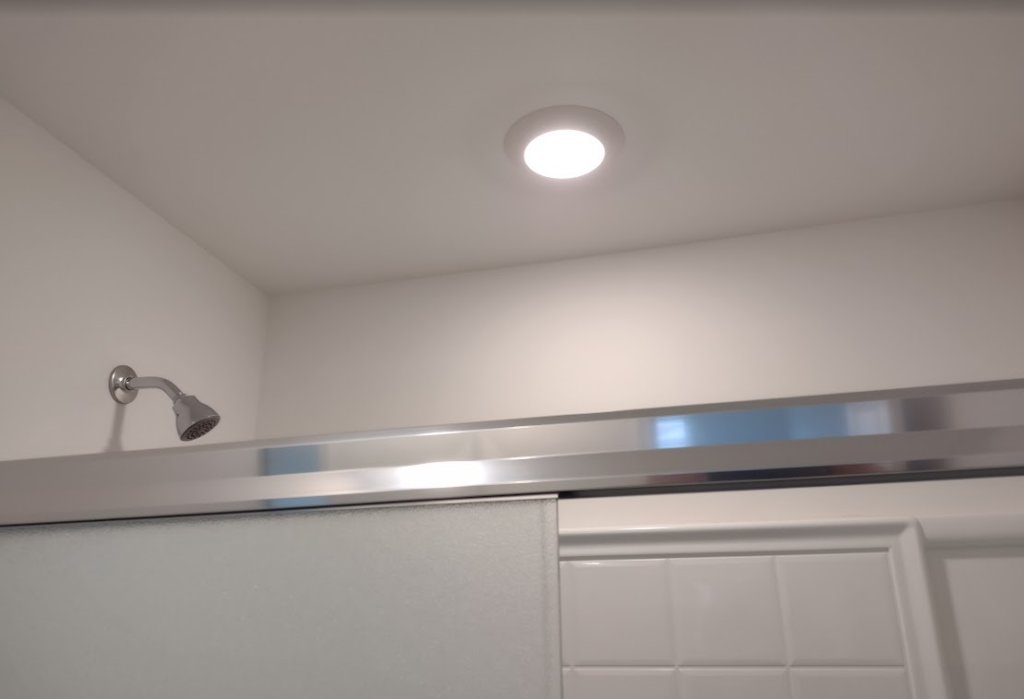
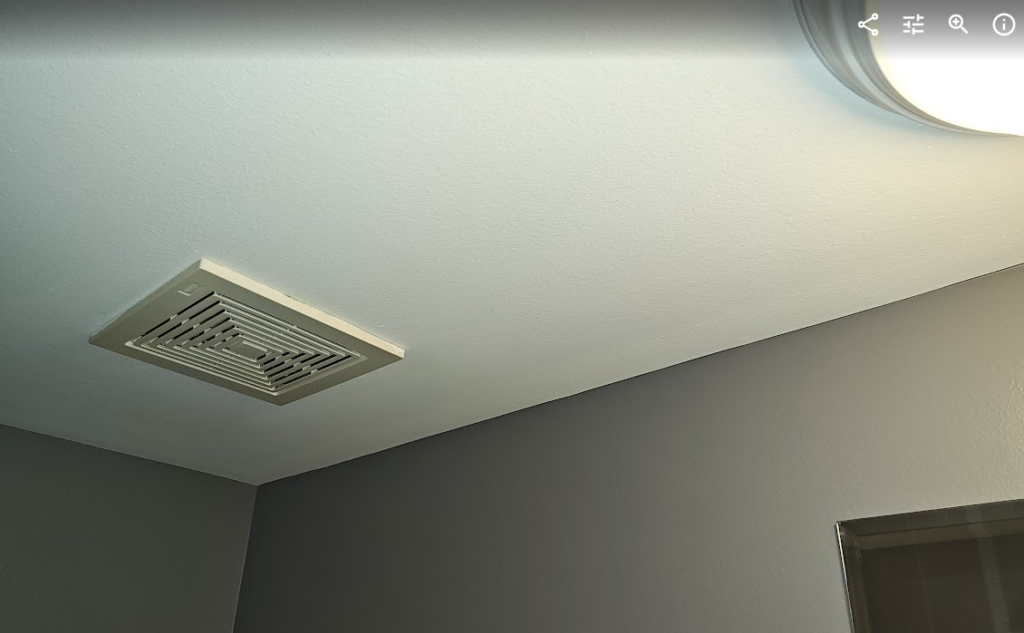
Do recessed shower lights need GFCI protection? It’s one of the more common electrical code questions I hear, especially when a recessed shower light or bathroom exhaust fan is installed over a bathtub or shower.
The short answer is: not necessarily.
The key to answering this question is recognizing that the NEC is addressing three different issues:
- Where equipment may be installed.
- How it must be listed.
- When GFCI protection is required.
Those are related, but they are not the same requirement.
Part of the confusion is that these separate Code requirements often get blended into one conclusion. The NEC addresses each one independently.
Start with NEC 410.10(D)
When discussing recessed luminaires installed in a bathtub or shower area, the governing section is NEC 410.10(D).
The Code establishes a restricted zone extending 3 feet horizontally and 8 feet vertically from the top of the bathtub rim or shower threshold.
Within that zone, the following are prohibited:
- Cord-connected luminaires
- Chain-, cable-, or cord-suspended luminaires
- Pendants
- Lighting track
- Ceiling-suspended (paddle) fans with luminaire (light kit)
That restriction is why hanging fixtures deserve their own discussion. This article focuses only on recessed luminaires and bathroom exhaust fans.
What Does NEC 410.10(D)(2) Require?
For recessed luminaires located within the bathtub or shower area, NEC 410.10(D)(2) addresses the fixture’s suitability for the environment in which it is installed.
A luminaire located within the actual outside dimensions of the bathtub or shower to a height of 8 feet above the bathtub rim or shower threshold must be marked:
- Suitable for damp locations, or
- Suitable for wet locations.
However, there is an important distinction.
Where the luminaire is subject to shower spray, it must be marked suitable for wet locations.
Simply being located within the bathtub or shower area does not automatically mean the luminaire is subject to shower spray. That determination depends on the actual installation and exposure to water.
Notice what this section addresses.
It tells us how the luminaire must be listed for the environment.
It does not establish a blanket GFCI requirement.
Do Recessed Shower Lights Need GFCI Protection?
This is where many people jump to the wrong conclusion.
NEC 410.10(D) does not require every recessed shower light to be GFCI protected simply because it is installed over a bathtub or shower.
Instead, the section addresses:
- Where the luminaire may be installed.
- Whether it is listed for damp or wet locations.
Those are location-rating requirements—not GFCI requirements.
What About Bathroom Exhaust Fans?
Bathroom exhaust fans create another common point of confusion.
The NEC does not contain a general rule stating that every hardwired bathroom exhaust fan installed over a shower must be GFCI protected.
However, some listed bathroom exhaust fans approved for installation over a bathtub or shower include installation instructions requiring GFCI protection.
When they do, NEC 110.3(B) applies.
Section 110.3(B) requires listed, labeled, or identified equipment to be installed and used in accordance with the instructions included in its listing, labeling, or identification.
If the installation instructions require GFCI protection, that requirement becomes part of a Code-compliant installation.
Where Does NEC 210.8 Fit In?
Article 210.8 establishes where receptacles require GFCI protection.
It does not create a blanket requirement that every hardwired bathroom exhaust fan or recessed shower luminaire installed over a bathtub or shower be GFCI protected.
An interesting addition in the 2023 NEC is Exception No. 4 to 210.8(A), which states that factory-installed receptacles that are not readily accessible and are mounted internally within bathroom exhaust fan assemblies do not require GFCI protection unless required by the installation instructions or listing.
Notice what this exception is addressing.
It specifically applies to the internal factory-installed receptacle within certain bathroom exhaust fan assemblies. It does not establish a general GFCI rule for every bathroom exhaust fan.
That exception reinforces an important point.
The NEC recognizes that some GFCI requirements associated with bathroom exhaust fans come from the equipment’s listing and installation instructions—not from a blanket Code requirement for every fan installed over a bathtub or shower.
If you’re looking for a broader explanation of where the NEC requires GFCI protection, this guide walks through the most common residential locations and the Code sections that apply.
Related Article: GFCI Protection Requirements Explained
Three Separate Requirements
One reason this topic causes confusion is that electricians often combine three separate Code concepts into one conclusion.
1. Location Rating
NEC 410.10(D) determines whether the luminaire must be suitable for:
- Damp locations
- Wet locations when subject to shower spray
2. GFCI Protection
The NEC does not generally require every recessed shower light or bathroom exhaust fan to be GFCI protected simply because it is installed over a bathtub or shower.
3. Manufacturer Installation Instructions
If the listed equipment requires GFCI protection as part of its installation instructions, NEC 110.3(B) makes those instructions enforceable.
These are three separate requirements that should not be blended into a single conclusion.
Inspection Takeaway
When inspecting or installing a recessed shower light or bathroom exhaust fan, ask these questions:
- Is the luminaire installed within the bathtub or shower zone described by NEC 410.10(D)?
- Is it marked for the required location?
- If it is subject to shower spray, is it listed for wet locations?
- Is the bathroom exhaust fan listed for installation over a bathtub or shower?
- Do the installation instructions require GFCI protection under NEC 110.3(B)?
- Always check with your Authority Having Jurisdiction (AHJ) to determine whether any local amendments or adopted policies affect the installation.
Answering those questions will usually resolve the issue without assuming requirements the NEC does not actually impose.
Final Thoughts
The key is asking the right question.
NEC 410.10(D) answers whether the luminaire is suitable for the bathtub or shower area.
NEC 210.8 tells you when GFCI protection is required for receptacles.
NEC 110.3(B) requires listed equipment to be installed in accordance with the manufacturer’s installation instructions.
Keeping those requirements separate will help you arrive at the correct Code answer instead of relying on assumptions. Understanding which Code section answers which question leads to more accurate installations, more consistent inspections, and fewer misunderstandings in the field.
Get the Right Code Guide for the Job
Tired of code confusion, inspection fails, or second-guessing your wiring? These practical field guides and checklists are built for pros, contractors, and serious DIYers—clear, code-cited, and inspection-tested. Grab the resource that fits your next project:
Available Guides:
• Pass the Inspection: A Field Guide to GFCI & AFCI Code Requirements
My book with clear explanations, diagrams, and field checklists to help you wire right the first time and pass every inspection. Covers NEC 2020/2023, written for real-world job sites.
• Kitchen GFCI & AFCI Requirements Checklist (NEC 2020 & 2023 Field Guide)
• Laundry Area GFCI & AFCI Requirements Checklist (NEC 2020 & 2023 Field Guide)
• Garage & Outdoor GFCI Requirements Checklist (NEC 2020 & 2023 Field Guide)